
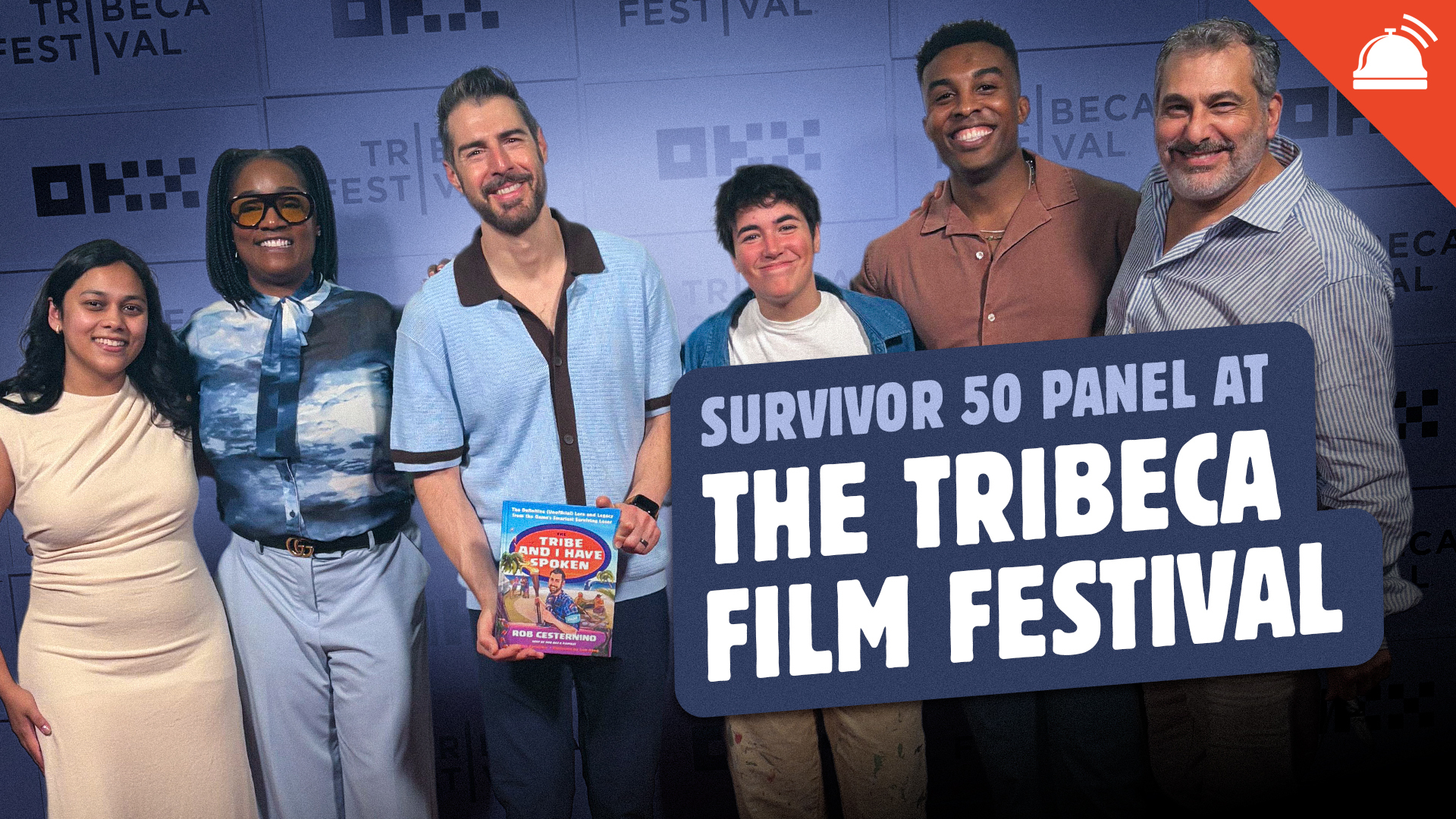
 Survivor celebrates its 25th anniversary at the iconic Tribeca Festival, bringing fans and legends together to reflect on 50 thrilling seasons of blindsides, alliances, and changing gameplay. In this milestone panel, Jane Rosenthal (Academy Award-nominated producer and co-founder of Tribeca Festival) is joined by Survivor icons including Rob and a panel of recent castaways to break down just what has kept Survivor fresh, relevant, and captivating for a quarter century.
[00:00:08] Good afternoon everyone. Please welcome Academy Award nominated producer and co-founder of the Tribeca Festival, Jane Rosenthal. Good afternoon everyone. Welcome to the 25th anniversary of the Tribeca Festival and a milestone like no other, the 25th years, 25 years of Survivor.
[00:00:37] Let's applaud. Come on. There's something that Jeff didn't tell you and he doesn't know this. And it goes back even longer than the 25 years. So I'll let you in on something I've never said publicly. So around 1999, I hope there are people who were born in 1999.
[00:01:06] I had a, as a producer, Bob and I had a deal at CBS Television Network. And Les Moonves, who was president of CBS Television, said to me, Janey, I'd like you to have this meeting with this guy, Mark Burnett. He's got this interesting idea. I said, sure. So I meet him. I meet Mark. He comes in, tells me about all of his history. Really exciting. And then he pitches me Survivor.
[00:01:37] And I said, oh, great. Nice to meet you. And I called Les and said, I don't get it. So you win some, you lose some. So now you understand what a reality show like Survivor is doing at one of the country's most coveted film festival stages.
[00:02:03] And we're really honored to have so many of the Survivors with us. Whether you're a long, lifelong fan or encountering the show for the very first time, I hope you can appreciate Survivor's enduring place in the cultural landscape and find something meaningful to gleam from the stark insight it offers into our country's and human condition.
[00:02:27] I certainly have gotten to understand why I passed on it. No. But why it's become such a phenomenon. So on the heels of Survivor's epic 50th season, we've convened the Survivor's legends.
[00:02:47] Please welcome tonight, Suri, Rob, Cirie Fields, Dr. Danielle Lenderman. Thank you.
[00:03:24] Welcome. Who's ready to talk about Survivor? So I guess my first question for the panel would be, why are we here? Why talk about Survivor at the Tribeca Film Festival? What would you say to someone who came up to you and said, well, that's just another reality show. How has Survivor changed our culture? Rob, you look raring to go.
[00:03:51] Well, what I want to say is that, listen, that we are here at the Tribeca Film Festival. And you can't spell Tribeca without the word tribe. Look at it. Wow. Think about it. When did you come up with that? On the red carpet. We can tell.
[00:04:24] Well, we're here. I mean, Tribeca is known. First off, thank you all for coming. Give yourselves a round of applause. You know, Tribeca is known for storytelling, storytellers and all different platforms. It started as a film festival and then it got into TV and music and interactive and gaming. And Survivor is one of the great story series of them all. People love it. What would I say to someone who says, why Survivor? I'd say, screw you.
[00:04:54] Survivor is the best TV show on TV. There you go. Yes. You know, it helps aspirationally. It takes you to places that all of us, I mean, that's why I started. I wanted to go do B. Robinson Crusoe. And it's got the greatest human drama and it's a competition, a sports show all in one. It's literally the greatest construct on TV. It's amazing. Yeah. I do meet people all the time who haven't seen it.
[00:05:22] I had to go on the show for some of my friends to watch it even because they think it's just about, I'm going to build a fire and I'm going to see how long I can last out there. But it is the greatest measurement of human interaction that we have. And it is such a cultural archive. You can go back and look at what were people like in 2005 just interacting with each other? How did we talk? And I also think this event is just about community. All of us watch it. And you don't always have people. Like I said, I had to go on the show for my friends to watch it, but I could always count
[00:05:49] on going to an RHAP show, a Rob show, and meeting other people who loved this thing that I love so deeply. And it's beautiful. And it's beautiful to see all of you who share in this passion with us too. Yeah. I also feel that it's such a parallel to just normal life. When we're on the island, people think, like Tini said, strategy and gameplay. That may come into play, but most of it is just existing with your neighbor.
[00:06:17] And that's what I think draws the masses because everyone here and everyone who watches can relate to someone on the show. And I think that's why it's lasted 50 seasons. Well, that was going to be my next question. Why do you think this show has lasted 50 seasons? And I agree with you about that, right? Those kind of like micro dynamics of everyday life. We all have friends and enemies and frenemies or people we think are our friends who then are our enemies. Right?
[00:06:43] And so there are things that we can relate to in Survivor even though it's this kind of exotic location featuring interesting challenges. Rob? Yeah. The format is so beautiful and it was so carefully designed. And there's a reason why it was Survivor that was this phenomenon. This idea of getting voted out of the tribe. It's something that is a part of us as human beings for our ancestors.
[00:07:12] We're tribal people. If you got out of your tribe as one of our ancestors, you would die. And so very much like it's – but like you really would back then. And that's why we like, oh no, like rejection. This hurts. And all those things are baked into the show. So there's just something about the format also that people of all different generations,
[00:07:39] they watch the show one episode and it clicks. Like you get it right away. Like it really is that from where they started, like a beautiful format. Come on, put Kyle's mic on. They're censoring me. They're censoring – okay, no, it's okay. And the game keeps developing, right? I mean I love sports. First off, go Knicks. Let's go. Nice. Thank you.
[00:08:06] But the game has changed from season one, Ceri's first season, Jonathan's first season, to where we are now. And we've seen – I mean it's sports, right? Like football and basketball, maybe there are players that change the needle, move the needle forward. Like Steph Curry changes the game slightly. But Survivor changes drastically while keeping the concept the exact same. Obviously there are twists. Obviously there are things that like sort of twist things up a little bit. But I think that people who enjoyed the first season can enjoy it on season 50 for completely different reasons. And at the end of the day, it's still the same show.
[00:08:36] So I think it's a really cool sport in a lot of ways too. Well, what do you think is the most kind of important or significant change that's happened in Survivor over the years? Oh, boy. I think the style of gameplay. Because from the earlier seasons, what my experience was is that you find your alliance and you stick to it and you ride it till the wheels fall off. And if someone wrongs you or says your name, put your name out there, they're dead to you.
[00:09:06] And now in the newer seasons, what I've found is the person that has led the charge against you is the person that you need to repair relationships with the most and work with the most moving forward. And that has worked well for a lot of people in this game, including myself. Can I ask if you think that that change in the game reflects any kind of change in society
[00:09:35] or is it just a change in the game? It's accelerated and 26 days is different than 39, blah, blah, blah. Or are we sort of accelerated as people too in the way that we have to move through the world? I think that's a good question, Jonathan. But I think, yes, I think we are more graceful in society and more forgiving in society
[00:10:01] and more open now in society to other ways of thinking, including just from a personal level with parenting. I have even shifted in my parenting style, even though my children are adult men, but I'm always going to be their mom. The old school way was it's my way or the highway. And even in parenting now, it's kind of like, let me understand you. Let me hear where your point of view is. And I think that's what's reflected in Survivor as well.
[00:10:31] So when you stab me in the back, not you particularly, but whomever, I want to now understand why you did that and learn how we could work together moving forward. So we've all evolved. Society has evolved to be more understanding and more, I don't know, all-encompassing, embracing maybe. More gracious. I love that. Absolutely. Yeah. Technology has also evolved. And there is so much to consume now about everything.
[00:10:56] And if you're a Survivor fan now, odds are is you've seen all the seasons you've studied. You understand when the 3-2-1 vote split was created and how that was done. When you can watch YouTube videos and podcasts and really study the evolution of the strategy and go into the game with innovative plans that you want to do. And that just wasn't a thing. You guys built that. You guys created that for us to be able to study and to be able to bring. And that is such a huge part of it.
[00:11:23] Yeah, they broke it down old school, new school, so we can face up. And realize that. No, it's true. I mean, and I want everyone to speak, but, you know, I got to play with people that had never heard of Survivor. You know, I was literally out there with people and I'm like, there's a game happening right now. Yeah. People are plotting shit and you got to figure out what you're going to do. And they're like, can't we just have fun? Aren't we here? Let's have a coconut. And I'm like, no. And they, you know, all got voted the hell out of me.
[00:11:53] Sounds like Survivor 48. But to piggyback on what Penner is saying, where that he's playing a game and there are people who are on the show at that point who are like, hey, Penner, you went against us. You're a bad person. Yeah. That the people who play the show now and the evolution of the show now is that everybody is very aware that it's a game.
[00:12:17] And there's exceptions in the modern era, but I do think that the idea of this person wronged me is that there's a more of an understanding of, okay, well, that person's making a move. I may not like it. And there's a sportsmanship on Survivor in the way. And that is really cultivated and fostered, I think, in the game now in the way that way back when, hey, you crossed me, you're dead to me. And the show really kind of celebrated that idea.
[00:12:46] And you think that stems from the fact that you have people coming on who've kind of studied up on the show? Yeah. I say that in the new era, it would be wild if there's anybody that's on the show now that hasn't seen 30 seasons of the show. And I think that we all played with people who never watched one episode for me and Penner and Zuri. Right. Right. You know, but the notion, you know, to follow on what you were saying, even I, you know,
[00:13:12] even I have evolved, but the don't take it so personally. Right. That's something that I've tried to bring into my own life. It's like, it's not about you. Don't take it personally. You know, what's going on with that other person. And understand, have more empathy, walk in their shoes, all of those things. And I wasn't like that 20 years ago when I started playing. I took it very personally. And I think the betrayals that happen, we try not to take them personally.
[00:13:40] It's the shame of fucking screwing up ourselves. You know, Ozzy walking out again with an idol in his pocket. Oh, boy. You know, the poor man has no one to blame but himself. And he has to live with that. No one betrayed him. You know, that's... Oh, God, that's... Maybe you... We got to leave him alone. Please. I agree, Kyle. Sorry. Anyway.
[00:14:09] I also think it's attention spans, right? Like, we all had lunch and we were talking at the table and none of us watch movies right now. Right? Like, everything we consume... People, you know, no offense, Rob, people don't even listen to podcasts anymore. They're watching clips. You know? And so... I'm just kidding. But... We have clips. Okay, Kyle? And so everything... We're not patient anymore. Everything is so go, go, go. And obviously the game, a big change has gone from 39 days to 26.
[00:14:34] But I think even if there wasn't that shift to 26, people want to do things so fast. And they want them to be so big all the time. And I think that's also a reflection of what we're seeing, obviously, in society and the game as well. Why'd they make the episodes 90 minutes then? Fair enough. Because it's just so good. It transcends the attention span. There you go. Right. And there are only 65 minutes of actual show and 25 minutes of commercials for 90 minutes. He said we want fast, but we still want more, Rob. Yeah. 90 minutes is definitely more.
[00:15:03] I would take two hours. Well, I do think that the way that the show is constructed is that they don't want there to be ever like a slow moment. And I think that's why there are so many twists and advantages and journeys. There's always something new happening. I think that that does play into the shorter attention spans of viewers. So you've mentioned the twists. Is there a particular kind of twist or innovation in the show that we haven't seen that you folks would like to see on the show in the future?
[00:15:33] A season where there are four tribes divided by race. What a novel idea. Would be something that would go over so big now. Yep. Jonathan's evolved. Anybody got an answer for that? I think. All gay season. All gay season. Love it.
[00:16:02] I think dual confessionals would be pretty cool. Like all of these dating shows have two people in confessionals at the same time. It'd be very difficult to do on Survivor. I think there's very few moments you could do it. But as somebody who watched 48 back and saw all the things that Camilla was saying behind closed doors, I think it would have been nice to be in there moderating a little bit. Camilla, do you want to speak to that? I'm being moderated right now. Other changes we'd like to see on Survivor?
[00:16:32] I think any twist would just be used on me and I'd get blindsided. So I'm going to say no. I would like to see, you know, we've seen a lot of three tribes. I want to see bigger groups going to tribal council. Because when you do have three tribes, it's kind of like, you know, the people that are on the tribe that aren't going to tribal council don't need to start playing the game as hard. You only really need to start playing hard once, you know, you realize you have to vote someone out.
[00:16:59] And so if there are more opportunities for people to get voted out, then people are going to have to play the game earlier and faster. And I think that's interesting for me. So I want bigger groups going to tribal council. Interesting. I agree. Thank you. Well, that speaks to me something, you know, you have to win to win. I know that sounds so obvious. But if you're in a tribe and you win that first challenge and you get a flint and you get some food, you have such an advantage and it tends to that you then keep winning.
[00:17:28] And if you're losing, you're demoralized, you're hungry and you start losing and the slope is super slippery. Maybe that's a reflection of society and the world or I don't know. But, you know, that twist that you can bring people out there, even if you're ostensibly winning, you still got to be playing the game, not just as a physical challenge, you know, mastering team. I think it's a bad idea. I think it's cool. I agree. I think one of the changes that you've talked about, Jonathan, is kind of the move away from casting kind of villain figures, right?
[00:17:58] More toward casting lovable folks like the folks we see on the stage today. Would the rest of you agree with that? You're not that lovable. Yeah. I mean, have you met us? Yes. Yes. I don't know if this is, and you guys know, I don't follow the media, but I hear that Jeff has decided to move away from villainous characters. And you were talking about this sportsmanship is now more of a thing.
[00:18:25] And we don't want sociopaths or psychopaths on the island any longer because we want the kids who are watching the show to see good choices being made leading to good results. Does that sound good? I don't know. Because in the world that we all live in, that's not really how it works, is it? Yeah.
[00:18:47] I mean, yes, making good choices can lead to good results, but there are psychopaths out there and there are people who wish you ill and who are trying to take your spot, whatever it is, in your business, in your family. I don't know. And so, you know, let's not pretend that it's all a kumbaya thing. And so I'm all for it.
[00:19:10] What I don't want, what I would be afraid of, and, you know, we talked about this, the psych testing that we all had to go through to make sure we were not going to hurt other people out there. We weren't physically psychopathic and going to, you know, burn people's socks. I think they decided once people were, you know, literally trying to hurt other people that that was a line that they had to draw. But I am all for folks who are diabolical and ready to do whatever it takes to move themselves forward.
[00:19:39] I think that's a great reflection of the society that we have to survive. I see folks nodding. I think you're going to get that, though. I think although they may not specifically look for that character type, I think a little bit of that exists in all of us, especially all of us sitting up here. So I think although they may not look to cast villains, I think some villains will be made for the future seasons. Interesting.
[00:20:08] Yeah, and I can only speak to my experience, but I was not even born when the show started. And I watched the show. My mom, who's here today, showed me the show when I was in fifth grade. I was a child and I loved watching the people fight and have conflict. And I learned a lot from that. And so I think that, you know, it's it's still good to have people. And like Cerise said, you can't predict how people will actually act and you can't predict who will be a hero.
[00:20:33] And even in a situation when there's a hero and a villain, you'll always have people who have different opinions on who is the hero and villain in that situation. And that's the beauty of the show that you can't change. And that's the beauty of like 16 human beings going on to an island. And that's the beauty of Survivor for sure. Yeah. Great point.
[00:20:50] I think what the show is hoping for is that they do want there to be conflict, but conflict like around the game in the same way that like in sports, you would see two teams who wants it more. I think that they still want that of this person has a thing. This person's in my way. I want to get rid of them. I think that the show really doesn't want to explore. Hey, I don't like this person for whatever reason.
[00:21:19] And I want to get rid of them. Or there's somebody who is intentionally trying to be a bad person on Survivor. I just think that that's the direction the show really wants to go away from. Less interpersonal conflict and more game related. Interpersonal conflict in the same way around like if you were playing a board game of like, hey, like, well, I have to get, you know, this person has a hotel on Park Place. I got to get rid of them. Hey, I got to take them out.
[00:21:47] That's the kind of conflict I think they're looking for as opposed to I hate this person because I can't. They're whatever type of person. I hate that. To that I say, make sure you have your identity all squared away before you go. And that won't come up as much. Well, I think another change that you've talked about, Jonathan, and continuing on our theme of storytelling, right, is kind of the increased emphasis on telling one's story. Right.
[00:22:17] And I think, you know, the theme of the show, Outwit, Outplay, Outlast, do you think that that's still as important as it once was? Or is it more about how you state your case, how you tell your story? Oh, it's a great question. I don't know. I think that you still are outwitting, outplaying, and outlasting. And I think that you do that with your character. I mean, character is story, right? Right.
[00:22:43] And so you go out there and you have to work with people, maybe this past season, people that you know or you know of. My season's people I didn't know. And you have to navigate those shores. And if you do it properly and don't make a mistake and shoot yourself in the foot, maybe you will emerge the winner. There's an element of luck. Like any good story, there's an element of luck.
[00:23:07] And it's all about character moving through the circumstances that are within you, your own personal demons that you've got to wrestle with, that are activated by the shit that's coming at you. And they throw stuff at you to trigger you. And it's that wrestling, that tension that makes any character compelling and any story compelling, I think. And so Survivor does that beautifully. That make sense? Absolutely. I was going to say just that. Exactly how he said it.
[00:23:35] I also think that the way that you play the game is so much wrapped up in who you are. Right? Like everybody goes into Survivor and says that they are going to be this or they're going to be that. But when you strip down Bear, you're going to be who you are at the end of the day. I think the best piece of advice I saw going into season 48 was Tiffany from season 46 said, like, if you have a strategy, yeah, give it up. She said, write down, keep on writing it down.
[00:24:03] Like, don't forget what those core principles are because you're going to lose them out there. Right? Like, so much of how I played the game was a reflection of who I was. I am a lawyer. I used to be a teacher. I think those helped me. I also, I've been incarcerated three times. I think the way that I had to move in jail and the way that I've had to move around people in difficult situations definitely informed how I played the game and how I fit in with people on my tribe. You cannot get away from it as much as you try. I think that's a beautiful thing. And it also allows you to tell your story in the process.
[00:24:35] I do think back to Outwit, Outplay, Outlast. I do see this, like, what I think is a misconception with other people where they think Outplay means doing well in the challenges and surviving and stuff. But the game is more than just challenges and surviving. It is the strategic gameplay as well. And so I do think, like, even now in the new era where people say, oh, you know, people aren't surviving and they don't do that. They are still outplaying at the end of the day. It just might not be in challenges. It's just the game overall.
[00:25:05] Yeah, I feel like those definitions have changed over time. And we have a scholar here, Mr. Rob Cicerino. I would love to know what you think the modern definition of each Outwit, Outlast, and Outplay is. Wow, this is like I'm in the final three. The modern definition of Outwit, Outplay, Outlast. I mean, Outwit, I think, is, I think that goes without saying. But I think that, I mean, yeah, you're like, outstrategize people.
[00:25:32] In terms of Outplay, I would say, like, I would still say that that's the challenge component if I was going to, like, take apart the slogan. But Outlast is the interesting one in terms of, like, I think that this is what, you know, we see so many of the winners do is just avoid all of the pitfalls that can take you out of the game.
[00:25:57] And I think that that's really ultimately the one that matters is they just outlast every single vote until you are the only person left that the jury votes for. How do I do? Would I get the vote? I got goosebumps. Yeah. Yeah, my vote. Anyone else? Outwit, Outplay, Outlast? Sari, you look like you want to say something. No. No? Okay. Sorry. I mean, I agree with what Jonathan said.
[00:26:26] I feel like you can't outwit, outplay, or outlast without involving yourself, your story, your relationships. They are most important to even make it to any of those milestones. You can't outlast if no one knows who you are. You can't outplay if you haven't had an alliance to get you to a certain point and outwit. Like Rob said, it's kind of self-explanatory.
[00:26:56] So I agree with what Jonathan said and with most of what they said here. Yeah, so a few of you have talked now about how kind of your identities and experiences from outside the show kind of filtered into the world of the show. But what about the reverse? Has being on the show and sort of dealing with the situations on the show changed how you interact with people in everyday life? Not for me. Like I'm a nurse. I'm a mom. I'm married for 23 years. My husband's right there. Hey, HB. Hey, HB.
[00:27:29] So, no, I moved through the game kind of how I moved through life. And that's why I said it's kind of parallel for me. And it hasn't really changed who I am outside of the game. I've been given more opportunities and I've been receiving like a lot of love. Thank you guys. I love you all right there. But outside of that, no, it hasn't affected. How is that to navigate kind of going from the show to working in the real world and being a nurse?
[00:27:58] I don't know. I'm going to shoot that to Camilla. We were having a conversation backstage. I said, are you back to work? She was like, yeah, once it's over, I'm just back to work. Because we all are just regular people that have been given the opportunity of a lifetime and experienced such an amazing journey. So, I don't know. Camilla, how is it for you? It was very easy to transition back to normal life.
[00:28:21] I mean, there was a little like you come off as high from Survivor and you go, you try, at least I tried to go back to my normal life the first time. And there was an adjustment period where nothing in my normal life was giving me the same dopamine that Survivor did. The dopamine that I would get from winning challenges or surviving tribal council or saying something and looking at the jury and seeing them liking it. I wasn't getting those dopamine hits in real life. Derek, you're great.
[00:28:51] You're wonderful. But it's not the same as Survivor. But then after some time, your brain gets to balance and then it's like, yeah, I'm just a normal person with a normal job. I will say for me personally, playing Survivor sort of made me look back at myself and be like, damn, I'm the biggest thing holding myself back. I was a very not confident person before I went out to Survivor.
[00:29:16] And I didn't have like, it wasn't like a, like, oh, I hate myself or I don't think I'm this, I don't think I'm that. I just thought I wasn't as capable as I actually am. And going on Survivor, doing the challenges made me realize like, damn, I can actually do a lot of things. And that has given me this confidence that hasn't left since I came back from 48. Some people I work with might say I'm too confident now, but I'll take that over like the level of confidence I had before Survivor.
[00:29:46] So I have to thank Survivor for that. Is that one of the reasons that you wanted to go on the show? To gain confidence? I wasn't aware of my lack of self-confidence. I wasn't aware that this was a problem with me until I caught myself going into every single challenge. And whenever Jeff, like I would just look at the challenge and immediately be like, no, no, no, no, no, no, no, no, no. Well, Jeff would ask Survivor's ready. I would always say no. Like not loud enough for anyone to hear. Not loud enough for anyone to hear.
[00:30:13] We're like, it's his countdown instead of like three, two, one, it's Survivor's ready. And I would just say to myself, no. And I think Jeff, Jeff heard me say something when he walked into some motion at Final Four where I was like, oh, you know, it's going to be so easy to drop out of this. Like, I'm just going to mess up. And he's like, no, no, no, no, no, Camilla, reframe that. And I'm like, oh, you know, I guess anyone can drop out, not just me. And that was when I was like, damn, I always look at it as I'm the person that's most likely to mess up.
[00:30:43] And that's when the switch in my brain activated. I'm like, wow, it's been me the whole time holding me back from everything. Can I ask, did you guys, because you were talking about watching the confessionals. And it is fascinating to finally watch the episode, right? Because we all have our own memories of these events. And stuff was going on back behind this. Everyone else was having their lives.
[00:31:08] And then you get to see how you were talked about, how you were plotted against or talked about fondly or whatever. You know, and I had this experience. And, you know, you were saying, oh, I got to see myself and have this new realization. I saw myself quite differently, in some ways very disappointingly, honestly, the first time I played. I'm like, oh, I'm the asshole in this season. No, no, I'm an asshole. This is terrible, you know. And so, which was eye-opening. And I hope I evolved. And, you know, you said, did you now go through life a little differently?
[00:31:38] Did you guys have that experience to see yourself and say, oh, I did not realize that this is some of who I am? I think I had the same experience as Camilla. Like, I was already at the interview portion. I'm like, oh, they're never going to select me. And once I played the first time and realized, damn, you are capable of us. I'm afraid at every challenge. I'm like, oh, God, what if I can't? What if I'm unable?
[00:32:08] How is it going to look? What if my family, I got bored? You know, all of that is running through my mind. And from playing the amount of times, each time I learn something more and I get something more. Like, damn, you need to be. And I say this when I do cameos. You have to. I'm my own worst critic. It's loud in my mind. But I have to be my loudest cheerleader. And I need to let the cheering for myself override the criticism of myself.
[00:32:35] And that's what I've gotten from the seasons that I've played. My whole world has changed after playing Survivor. And I think a lot of that is that it was, like, the biggest life dream that I've ever had. Which is, like, you know, I thought about it every single day for probably 15 years. What it would be like to play a Survivor. And I just, I mean, I'm wearing this shirt. It has Sari on it. Now I'm sitting next to you.
[00:33:04] So part of that is just the feeling of accomplishing something that you've thought about and dreamed of so long. It gave me a sense of, like, inner peace. And it opened up my mind to think about what else I would want from life. But it also, the experience of being perceived on such a wide scale was really new. And obviously, like, I was going through kind of a confusing experience with my own gender at the time that I played.
[00:33:31] And from jump, it was very much discussed online. And it gave me the opportunity to really identify what felt good to be called and what felt comfortable and what I didn't like. And that changed my, you know, whole trajectory. And it gave me the confidence to come out. It gave me the confidence to identify other patterns and relationships in my world. I quit drinking after the experience of being on Survivor.
[00:34:00] And I also met the love of my life through Survivor, Stephanie from Season 48. So there's three massive ways right there that, like, it has just completely turned my whole world around. And that's on top of just the fulfillment of doing something that I thought about for so long. And obviously, there's this other part that's like, well, what next? Because I did for 15 years want to do this thing so badly.
[00:34:23] And I'm searching for another passion that is to fulfill in the same way and to go after. So it's complicated, but it's been incredible. And I don't know that any of those things would have happened without all of, you know, the lead up to Survivor and all of that. Awesome. Amazing. Rob, I imagine you have something to say about this. I mean, you created this whole media empire around Survivor.
[00:34:52] Well, I played so long ago. And so I don't really feel like that going through the experience, I feel like that I was greatly changed. Although my wife watched the shows and then she said, no, you're an asshole. And so I had that. But then, but then like I had the whole rest of my life that I lived since then. And it's been over 20 years since I played. And I feel like I've grown and evolved in all sorts of different ways.
[00:35:22] And Survivor has given me so much, but it's hard for me to parse like what was from Survivor. And what did I learn from, you know, 20 plus years of life? Yeah. Yeah. I think that a lot has changed about my life. I think that I'm more comfortable with just my voice and who I am as a person. I grew up in Southern Virginia. My family's from New York, though.
[00:35:49] And I grew up in this like rural area and was constantly sort of thrusted back and forth between my black community and a predominantly white school that I went to. And I code switched. I've had to do that throughout my life in all of my interactions. And I was constantly just trying to figure out because it sort of as a defense mechanism, like how do I get people to like me? Like because I don't want to get my feelings hurt. Like if I feel any sense of disdain or dislike towards me, it's going to like ruin my month. So like how do I just fit in so I can sort of hide at the same time?
[00:36:20] And then I got on Survivor and I did. I never realized it, but I think that caused a lot of emotional turmoil for me. And I got on Survivor and I fit in with people. And the same thing that had caused me turmoil, I think my entire life allowed me to connect with people and play this game in a way that I thought was like fun and efficient. And then the television part aired and I hate the sound of my own voice.
[00:36:45] I hate some of the things that I've had to sort of change about myself to protect myself. But people were receptive to me. And for the first time in my life, I think I was like people like me for who I am, no matter where I am or what I'm trying to do. Or not everybody will, but there are people who do. And so I think that it's allowed me to be more vulnerable and just allowed me to like move comfortably in my own skin, for lack of a better term.
[00:37:14] If I may, that was beautiful. Everybody. And we all sort of had the same story. It was interesting. Two of us thought we were assholes or jerks or something. And everybody else had thought that they were not so confident. And we got to see ourselves. And what I love about Survivor and what is so moving to me when I'm interacting with folks is that we have become known as ourselves. You know, we're not actors or anything. We have come into your living room and made ourselves vulnerable even to ourselves.
[00:37:44] You know, exposed ourselves to ourselves, to all of you. And so we are identifiable and relatable. And that you have welcomed us into your living room week after week is why you're all here and why Survivor is so powerful. You know, it's because we're everyday people who are going through the same effing neuroses that everybody else is. It's just, you know, I always said the cost of the extraordinary experience of Survivor is you do it in front of 10 million people.
[00:38:11] You know, but the reward of getting to do it and play it was life-free. Worth playing for? Come on in, guys. Yeah, that was great. Anyway. That's what I did. Well, so we've touched on a few kind of, we've talked about a little bit about code switching and gender identity.
[00:38:33] And, you know, over the years, Jeff and Survivor have tackled a variety of kind of social issues and topics, race, class, gender identity, sexuality. Do you feel like there's kind of social issue or topic that Survivor has handled particularly well? And is there an issue or topic that Survivor hasn't tackled yet that you'd like to see kind of on the show in the future? That was a compound question. Sorry.
[00:39:03] It's a really complicated question. Yeah. Because all of the situations have their own complications. Like, for example, Zeke. That was an extremely upsetting and unfortunate situation. How it went down. It should have never went down because, obviously, Varner never should have done that to him. But, obviously, it opened up a conversation that, for me watching, did change something for me and do something for me. You know, how Jeff took control of the situation.
[00:39:33] How the others immediately jumped in and condemned what happened and supported Zeke. And to just see the representation in general moved mountains for a young person who is still figuring it out. And I think it is, like we've said about everything with Survivor, it's something that happens in the real world. And it's one of those things where, like I said, a lot of people who I'm close friends with who don't watch the show,
[00:40:01] You can put that moment on and everyone is on the edge of their seat because it is so real. As unfortunate, upsetting as it is, it is so real. And it's not something that you see on TV every day at all. Yeah, I kind of agree with what Tini is saying. But I also think I want to kind of give them applaud Survivor for addressing situations, real life situations,
[00:40:29] real life issues as they come up and doing the best that they can to be inclusive and to address them and have the conversations. Sometimes hard conversations, but they have them in front of their audience who is the reason Survivor still exists. And some of these issues affects the audience and masses that are watching. And this is why Survivor is what it is, because the people watching, when the issues arise and Jeff handles them and brings them to the forefront,
[00:40:58] it speaks to them and they may be watching saying, yes, that's what I'm going through. That's why people relate to Survivor and that's why Survivor will go on far past season 60. I said it here first. Y'all call me season 62. Okay. I'll say also that I think one of the strengths that I think historically over 26 years of the show is when things come up organically between the players.
[00:41:25] And when not so much as like when like, okay, well, let's talk about this at tribal council. But it's like people use you because Survivor gives you the opportunity to see real people from, you know, where the show was, you know, conceived from a from all different walks of life. And it was in the first season of like, here's Rich and Rudy, a diet. And they don't understand like Rudy doesn't understand rich. This turned off immediately by him, but they get to know each other.
[00:41:54] And, you know, you see that relationship form. And I think about like in you in when Jamal and Jack have the conversation that's just between them. It's not like with the whole tribe and it's not part of tribal council where Jack called the buff a do rag. And Jamal is like, hey, like we got to talk about that. And I think that those are when Survivor does these important moments the best.
[00:42:22] Yeah, I think following up on that, I hear a lot of discourse now like Survivor is trying to push things on us. And I actually just think it's the opposite. Like I think it comes down to casting, right? Like I think at the beginning of Survivor's tenure, you saw a lot of the same caricatures of people casted or what you would expect from somebody who looks like that or this. But now as the casting has progressed, as the show has progressed, you see tons of different people on there.
[00:42:47] And what that's going to give you is so many more variables so that those situations that people have just brought up can actually happen. And so it's the same game. It's the same thing that's happening. People making connections. But because we're seeing people from different backgrounds, those connections are different. The drama is different. The turmoil is different. I think that's like as people continue to progress, we're going to see different issues pop up on the show. And I think like you just want to continue to see different types of people, right?
[00:43:14] Like there's somebody out here who hasn't seen someone like them on Survivor. And I think like we just got to keep on making that happen. We got to get those people on. Right. Are there any types of people specifically, not just you, but anyone who you'd like to see cast on the show? Trans women. I'd like to see more like blue collar workers. I think that...
[00:43:46] Trans women blue collar workers. Yes, yes, yes. Put it on a t-shirt. But I think that like that's sort of... Because so many people who watch the show are now getting on the show, a lot of those people are in like traditional stereotypical white collar jobs where they're like really honed in on the strategy and things like that. But I think that there's so many more perspectives to be offered by the game when we have more diversity of profession too. That would be really cool to see. Like my dad was a railroad worker.
[00:44:12] I think he would have been phenomenal on Survivor like 10 years ago for not just that, but for so many reasons. No, I love that idea. I totally agree. And part of the problem is just the... Who can literally afford the time and the energy to take 30 plus days off, let alone know how to work the levers to get your videotape seen and moved forward.
[00:44:36] To have that kind of social acumen to make yourself viable and have it viable in your life to be able to say, I can go and do this. And unfortunately, it has become... Maybe it always was, but at this point, it's kind of a self-selecting group of folks who either are achieving a certain income level, have achieved one, or are like students or artists or something whose schedule is more variable anyway.
[00:45:06] Is that right? I think. You know, railroad workers, God, it would be incredible. Not just to have your dad here. I would love to meet him. But, you know, to have blue-collar folks, it's very hard to take the time to do Survivor, I think. That's a great point. I think it's a choice, though, because I'm a blue-collar folk, and I always have been from the beginning when I started 20 plus years ago. I'm a nurse. I've been a nurse in the operating room.
[00:45:35] I'm going to be a nurse in the operating room on Monday when this is over. But it's just a choice that, am I going to let this opportunity pass me? Am I going to take the opportunity to live life and experience things I've never experienced before? And that's what this has been for me.
[00:45:54] Like, I've been exposed to, like you guys were saying, there's people from all walks of life, from the lunch lady to astronauts, people I would never come in contact with in my regular, everyday life. So it just comes down to making that choice. Like, yeah, maybe I'll have to give up cable or, you know, something else in my life so that I can make this happen and experience this opportunity. Awesome. Love it. Yeah.
[00:46:23] Well, I know you're an inspiration to a lot, a lot, a lot of people. Yeah, I mean, I think one of the things that's so profound about Survivor and a lot of reality TV, right, is that it's not like, okay, we're going to do the very special episode about, you know, X type of person today. It's just people, right? Living their lives. And as you said, organically dealing with the issues that come up in everyday life, issues that then filter into that world of Survivor.
[00:46:52] One of the things I'm curious about, I think it's been touched on a little bit, I know, Tina, you talked about kind of coming to the show as a fan of the show. What were the reasons that made you want to kind of get up off your couch and audition for Survivor? Oh, great. Okay. I was, I'm a fan. And like, pretty much everybody here, everybody here, I was watching and I would be screaming at the, no, don't say that. Oh, they're going to vote you out. Why'd you do that?
[00:47:21] And my friends who I would talk about the show to growing up say, you always said, I'm going to go on that show. And it was just that. Like, I love the show. I love the concept. I love the, I loved everything about Survivor. And I just decided one day, you know what? I'm going to try. And the rest is history. I'm here now at Tribeca Film Festival. Little old man, girl from Jersey City, New Jersey. Anybody else?
[00:47:51] I'll go. I mean, like I said, I was shown Big Brother and Survivor when I was in fifth grade. And that quickly turned into me printing out pictures of the cast and pasting them onto my agenda book at school. And it's the closest thing that I've ever had to like a religion is loving this stuff and studying this game. And like becoming obsessed with people and modeling myself after people and learning from it and becoming absorbed in the community.
[00:48:16] And it's also just always felt like a place where there is something to the fact that the first winner of Survivor was a gay man. It's something like, I think it's a way for queer people to see all the things that we've had to do in our life. In terms of integrating ourselves socially and overcoming adversity. And everybody has their own unique version of that and what they get from Survivor.
[00:48:42] But for me, I saw a lot of the things that folks on these games were doing was stuff that I wanted to be doing in real life where I already was. And it was just always, it felt inevitable to me that I would end up there and get there. And a lot of the things that I did in my life were with the mindset of wanting that. And so I put myself in work situations and job situations all with the mindset of like, this is going to teach me something that might help me on Survivor. Which is psycho. So I don't recommend that.
[00:49:11] But it's been truly the honor of my lifetime to then transform into somebody who people watch and go, no, don't do that. Don't say that. So, yeah, that was it for me. Yeah. I think when I got into Survivor during COVID, which happened to align with the end of my law school career. And like, I was super excited to like, get out of law school and get out into the world and start making money. And I got out. I was like, I'm going to take care of my family. I'm going to do everything. And I came out of law school.
[00:49:40] I had like $160,000 in debt and I was just working harder. And I was like, this sucks. And then like the people that I was around all the time. And like, I've been really fortunate with like who I've worked with and where I've worked. But like a lot of times lawyers can take themselves really seriously. So I'm like, if I'm in more debt than I was before, I'm not like really doing or achieving what I was hoping to do. Like, I'm just going to go for something and do what I want instead of just sort of like being a part of this wheel.
[00:50:06] And I think that the first episode I saw Survivor was when Denise idled out Sandra in Winners of War. I had no context. I had no idea what was going on. But I was like, this looks interesting. And I was like, it's more interesting than what I'm doing. So I'm going to sign up for it. And I can't believe I got picked. Awesome. I can. Yeah, we can. Is there advice you might have to folks who are interested in being on Survivor in terms of?
[00:50:38] Auditioning? No. I feel like a lot of people are, I mean, the first time I filmed the video, I was trying to be someone who I wasn't. I was trying to be someone who I saw on Survivor because I thought, you know, they were the closest thing to me on Survivor. Let me try and play up those aspects of me. That went horribly. I rewatched the video not too long ago. And I'm like, who was that? Why did I do that? Just talk in the video.
[00:51:06] It sounds stupid, but like, I saw this advice on Reddit. And I followed it for my audition for 48. And I'm pretty sure that's why I got called. And the advice was, two stories are better than like five facts about yourself.
[00:51:25] I didn't talk about any, I mean, in the callback that I got after sending my video, the casting person on the phone was like, you didn't tell us your name, your age, where you lived, where you were born, nothing. But we want to know more. Like, because confessionals are just storytelling. The whole show is storytelling. And so if you can show how you tell stories in your video, that'll give them good signal on like, do they want you? Do they not want you?
[00:51:53] So like, make sure you're a good storyteller. So the moral here is follow the advice on Reddit. Always listen to Reddit. Always, always listen to Reddit. Especially when they're talking about you. Yeah, I think that like Camilla is saying, I think that you have to think about it a little bit like this is like your pilot for your confessionals. That's really what they're looking for.
[00:52:19] So if it helps, think about it like you're in confessional, you're talking to the audience. And I think that that's the biggest thing that they want to see. Yeah, it's storytelling is the key word. And like they always say in storytelling, it's important to show and not tell. So when you find yourself wanting to be like, I'm super outgoing. I'm the life of the party. I'm really competitive. Anytime that you catch yourself saying an adjective, replace it with a story that demonstrates how. Like, how are you outgoing?
[00:52:49] Like, do you like give me an example. The more specific and detailed you can be, the better. Because all you're doing in your confessionals is talking about other people. So the more stories you can tell about how you integrate with other people without just having like a catch all phrase to describe it, the better. Yeah, they want you to be funny. They want to know that they can cut to you in a confessional and you're going to tell them this truth. And you're going to have a perspective that no one else on the show has.
[00:53:17] Maybe it's a perspective that somebody else on a previous season might share. But they need to know that they're going to cut to you. And you're not going to be like there was a guy on one. I don't even remember his name. I'm sorry. But he was just like he just like froze up. And he's like, I don't know. It was kind of, you know, you know who I'm talking about. And that ain't going to work. So they need to know when they cut to you and you're going to talk, you'll be funny. So be funny. If you're not funny, you're not going to get on. They put Kyle on. Is that true?
[00:53:48] Everybody on this stage is funny. Everybody here has a great sense of humor. They do. And they're, you know, our personalities were very diverse here. But that's that is the common thread, I believe. And the common thread of the folks who go far and have impact on Survivor. And they look, they cast people so that they everyone's going to go in some order. Somebody is going to be the first one out. They might have hoped that you were going to go all the way to the end.
[00:54:13] They need 20 people or 16 people, all of whom are going to make great TV all the way to the end. And those are folks with big personalities who are funny. You look like you're going to say something. No, that's just my face. Say something funny. So, I mean, we've talked a little bit about representation and social issues. I kind of want to circle back to do you feel like there are any kind of social issues that have not been explored on the show?
[00:54:42] I think one of the things we talked about, Jonathan, is politics. Do you think politics, which really hasn't been explicitly discussed on Survivor, and we don't have to explicitly discuss it here today. But do you feel like Survivor kind of necessarily has to be a world apart from politics? Or could you see a scenario where politics is openly discussed on the show? I mean, it was openly discussed with a couple of arch-conservative guys I played with.
[00:55:12] That never made it onto TV, although I think Jeff Kent did badmouth Obama in his final trial. $600,000 after Obama takes it. I want to win a million bucks. I saw Kyle complaining about his taxes recently, too, though. What did I say? Michael Scoopin, may he... You know. God, what a dick he was anyway. But he was just like, hey, you're not so bad. Liberals aren't so bad.
[00:55:40] Just don't take away my guns. Let's not get into Scoopin'. Sorry, I even... Let's not. But it's dangerous to talk about politics. You guys tell me. The second you do, you're putting a target on your back, and it's going to cause conflict. You need to sit around the campfire and not be yelling at other people. So, you know, you save that for Ponderosa. When the cheap liquor comes out, and then you can get down into it. I think you're absolutely right.
[00:56:09] I would never discuss politics on Survivor. However, I think the beauty of Survivor is the lack of censorship when you're with your tribe. Now, I'm not talking about what gets shown on TV. I'm talking about the freedom to do, play, say, speak. Whatever you decide is truly up to you. So when I hear people say, well, I got the bad edit, and they edited me wrong. Well, they can't edit what you don't do or say.
[00:56:36] So I think that is another reason why I love Survivor so much. Because I can go on there and act a complete fool if I choose to. Or I can talk about politics. I can talk about race relations. I can talk about whatever I want. And no one has ever said to me in 20 years, don't talk about that. Or you can't say that. They let you do and say whatever you want. And then they decide to show what they want to show. But don't talk about politics if you ever get chosen to go on Survivor.
[00:57:06] Nobody did on 47. Like, really, nobody did discuss it. So I feel like it's just one of those, like, will we ever know? What would they choose to include? How would they choose to tell the story if we, as the contestants who create the story, are, for our own reasons, tepid to discuss it with each other? Because it's our first time meeting each other. And it carries such a heavy weight. What do you think? I think, I'm remembering, I'm remembering we got on the beach and fans versus favorites.
[00:57:35] I was with part of the favorites tribe with Sari. And there was a woman there who left because she was crazy. And the first thing she said, right, you know what I'm talking about? She was a fan. And we had Amy and one other person. And she literally, this woman was like, oh, I'm glad we don't have any lesbians. We don't want any lesbians on our tribe, right? And we were all like, well, that's the first to go, right? All right, we got to get rid of this crazy psychopathic bitch.
[00:58:01] Is she the one who went up to Chet and was like, I've never met a gay man in my life? And he goes, you have, honey. You just didn't know it. Kathy Slickman, ladies and gentlemen. Yes, so just shut up. Just shut up. Wise words. On what Sari said, I think strategically in Survivor, at the beginning of the game especially, your entire job is to not stand out. I think that's at least my view. It's like you really want to just blend in.
[00:58:28] And obviously, political conversations can lend themselves more so to controversy than others. But I also think that, right? Like, I think that there's this big, like, I hate the phrase, like, oh, you're getting political. Because so much of our lives is just political. Like, you know, how you treat people. How you. I think that, like, how you treat people, what you talk about, what your interests are, all of it is wrapped up in, like, how our government is run and what the political consequences can be in a lot of factors.
[00:58:56] Like, on our starting tribe, there was a lot of conversation about religion on season 48. Um, I'm not going to say religion is political, but there's a lot of overlap, right? And so, like, some people were more comfortable with those conversations than others. And it drove the starting dynamic of that tribe. Camilla almost didn't work with me because of, because of certain things. And that, no, oh yeah, no, sorry. Sorry. Let me, let me rephrase that. Let me rephrase that. Sorry, what? Camilla. Tell us more. Camilla.
[00:59:24] Camilla thought I was a Disney adult. Work with me because I'd be like, Camilla, I don't want Disney. Like, please. I like holes, though. Um, so all this to say, like, so all this to say, there was, there's so much overlap in my mind of our lives with politics. And it comes out of Survivor in sneaky ways. Um, and Camilla just doesn't like Disney. That's it.
[00:59:50] Big on what Seri said about, like, people, people might make a comment that is, like, really off color. And you can, in the real life, like, in, in the real world, go and inform them and educate them. On Survivor, that is a very risky thing to do for your gameplay. Like, on our, on a tribe on 48, there were many questionable things said. And in the real world. Not by me, not by me. Not by Kyle, not by Kyle, not by Kyle.
[01:00:18] In the real world, I would have stopped, questioned, why do you think that? What do you mean by this? In Survivor, you can't really do that because one of the, there was another comment, sorry. This will now put everything in context. I overheard at, at camp, someone say, cancel culture is crazy. Everyone gets canceled for the littlest things. Like, you can't even say anything anymore.
[01:00:45] And that's when I was like, I can't be myself on this tribe. I need to be, like, I can't be who I am in the real world here. Because I might be deemed as someone who is trying to cancel people and stuff like that. So that, the real world does affect how you play in the game. And you can't really play, there are parts of the real world that you can't fully play in the game. That are related to politics. Because you don't want to single yourself out.
[01:01:10] You know, you don't want to, people are very sensitive when it comes to this stuff. And, like, people will immediately, like, if you hear a comment like that, then you're like, okay, you know, I got to back off. And even though it hurts so much to not make a comment back in those times, you kind of have to bite your tongue. And just be like, there is a game being played here. There is a million dollars. Unfortunately, I will have to let this pass. Because I need the million dollars. I never learned that lesson.
[01:01:38] I had my ass bit every time. Because I could not shut up. Ass biting. I think that's a good place to end. So, I've been told we need to start wrapping up because we have a little treat for the audience. But I want to thank all of our panelists for being here today. It's been such an amazing show.
[01:02:14] Oh, let us throw them. Yeah, let us. This is wearing a shirt that was touched by Serene.
[01:02:45] Nice catch there. Are there more goodies? No, that was it. Those were the goodies for the audience. Okay. So is that, I guess so. So there's a clock up here that's been counting down, guys. We still have 32 seconds. Can I ask, is there one question? You want to ask them? Is there any question? Oh, I'm not going to ask the Donald Trump question. No, no. No. We're not going to ask that. Yes. Anybody? We have time for one question from the audience. Anybody? Who's got their hand up? Who wants it? That lady.
[01:03:23] It's a long question. What's the question? The question is, how many people have gone to a jury knowing already who they're going to vote for and not being swayed at the jury? Don't believe the hype. That's first of all. Second of all, everybody that plays this game, once you're at the end of the game or you're
[01:03:51] a part of the jury, you have been witness to everybody else's gameplay. So I don't care what you came into the game with, what mindset. It always changes. And this is why I tell people, don't come in with a strategy. That strategy is never going to work. You have to be ready to transition on the fly. And once you watch the game progress and be played and have the opportunity to sit on the jury, that is what you use to make your decision, no matter what anybody else thinks who lost.
[01:04:32] Are we done? Yes. Yes. Question. We can file out. There's a voice. Yes. We're done. Thank you, guys. Thank you. Thank you. Thank you. Thank you.