

Christian Hubicki Talks The Tribe and I Have Spoken
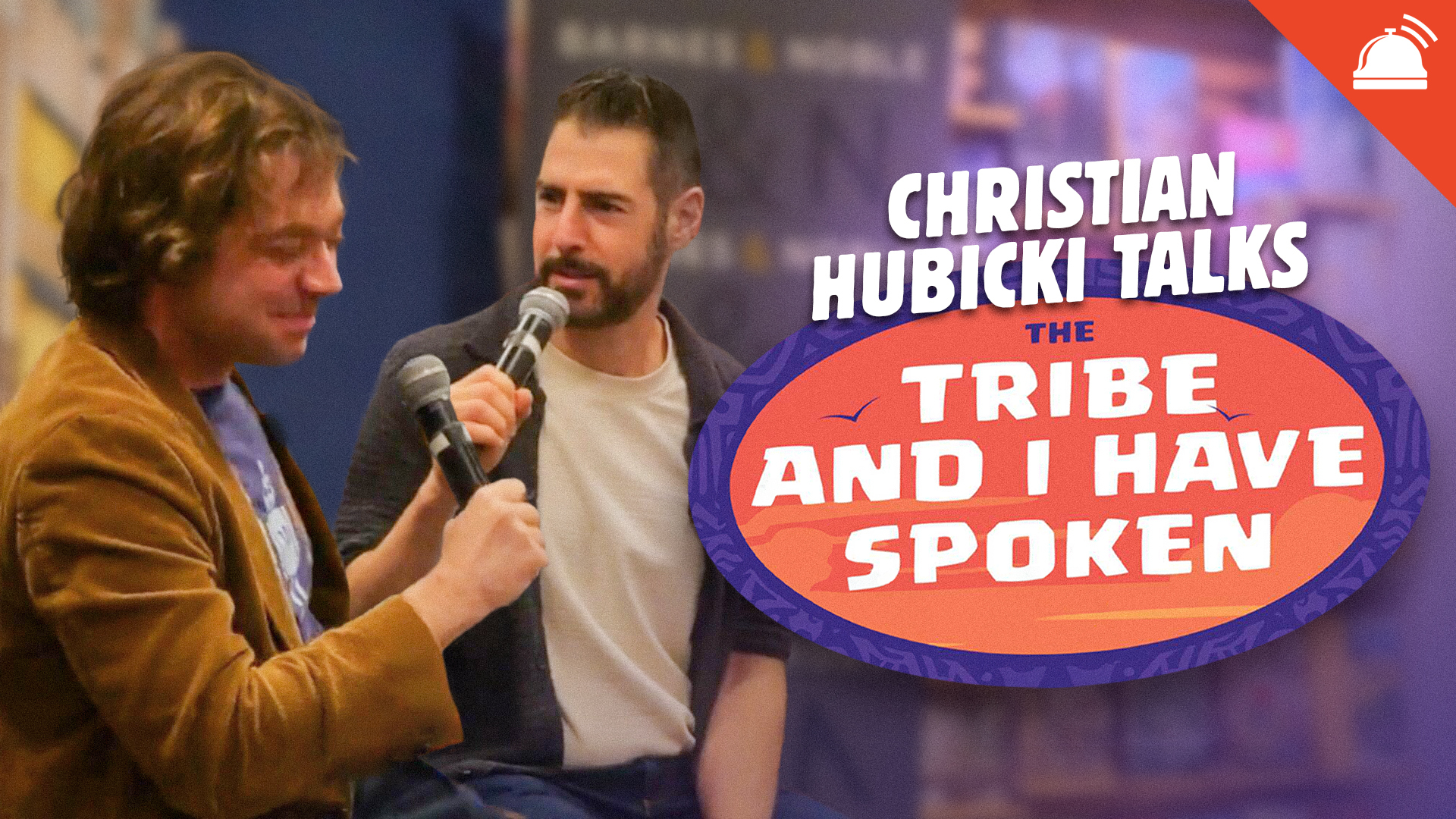
Survivor fans are in for a treat as Christian Hubicki sits down with Rob Cesternino for a special live interview celebrating Rob’s New York Times bestselling book at a sold-out Barnes & Noble event in Los Angeles. Instead of deconstructing the latest vote or breaking down Tribal Council drama, this episode spotlights Rob’s journey from Survivor castaway to podcast pioneer to acclaimed author, offering a fresh perspective on what it means to be part of the Survivor community for over two decades.
Christian and Rob dig into Rob’s reasons for writing the book, how it blends Survivor history with his own story, and what it was like turning 26 years of experiences into a compelling and often funny narrative. The conversation touches on the evolving role of Survivor heroes and villains, Jeff Probst’s influence both on-screen and behind the scenes, and the challenges of maintaining objectivity in a tight-knit fan and player community. There’s a behind-the-scenes look at Rob’s transition to full-time podcasting, the growth of the RHAP patron community, and the importance of just taking the leap to follow your passions, even if it all starts with a weird idea and a lot of trial and error.
– Rob explains how the book came together in time for Survivor’s 25th anniversary and what it meant to weave his autobiography into the show’s legacy
– Reflections on working with co-writer Alex Pavlovic and searching through years of RHAP archives
– Anecdotes about Survivor superfandom, chance celebrity encounters, and picking which Survivor moments did (and didn’t) make it into the book
– Christian asks Rob about work-life balance, advice for creators, and the evolution of Jeff Probst’s legacy
– Audience Q&A covering everything from the best forgotten players to how Survivor (and RHAP) connects fans around the world
Jump into this candid conversation to learn what happens when Survivor’s biggest superfan turns his microphone toward his own story, and find out why Rob’s journey connects with superfans and newbies alike.
0:00 Barnes and Noble Live Podcast
0:30 Rob Cesternino’s Survivor Journey Recapped
2:13 Writing the Survivor Book: Inspiration
4:06 Editing Survivor History Into Essays
6:34 Audience Judgment and Survivor Analysis
8:16 Evolution of Heroes and Villains Explained
12:15 Rick Devens vs. Joe: Hero Dynamics
15:41 Comparing Rob and Jeff’s Career Approaches
21:32 Going Full Time With Podcasting
26:38 Advice: Starting Your Creative Passion
To order Rob’s book, The Tribe and I Have Spoken, visit www.robhasabook.com
Never miss a minute of RHAP’s extensive Survivor coverage!
LISTEN: Subscribe to the Survivor podcast feed
WATCH: Watch and subscribe to the podcast on YouTube
SUPPORT: Become a RHAP Patron for bonus content, access to Facebook and Discord groups plus more great perks!

[00:00:10] Wait, turn this on? Yes, all right! From, they call it, Barnes and Noble. Boo, like a boon? There's a lot more rapping in that version of the store, I would say. But yeah, well Rob, this is an absolute pleasure to be here with you. And look, I know that you just got your introduction. I feel that now that I have you right in front of me,
[00:00:40] I have to just say, like how awesome is it to have Rob here? And one journey you have been through, you know, being on Survivor twice, starting a podcast, before podcasts were hot, you know, but now they're extremely, they're nuclear hot, I think is the phrase. I'm pretty cold now. Yeah, well, you might know better than me. But, and you've done over 5,000 podcasts now, and now New York Times bestseller, okay? And, but now you have written this book.
[00:01:09] Why write this book, my friend? Well, I'll tell you in a minute, but first off, how cool is it that Dr. Christian Hubicki is here? What a journey you've been on. Just a little bit. And I can't appreciate enough of how that you're out here for your trip, and you took some time out of your trip here to come to the Survivor finale, and be here with us.
[00:01:38] And so, thank you. I appreciate it. It's great to be here. Seriously, this was an absolute joy to get this call, to want to do this. Yeah. Because just my own history, I've been listening to the Robins Podcast for many years. I think I started around Survivor Cagayan, 2014. My wife and I would listen in all these long car rides we put on The Evolution of Strategy, which you put out. Oh, it's a great audio book to listen to. And so, I feel like I've had you in my ears for hundreds of hours,
[00:02:07] for over a thousand at this point. But like what, well over a thousand. But what inspired you to write this book? So, I would say that it was probably less about inspiration and more about timing, as any great Survivor player knows. And it was the 25th anniversary of Survivor that was coming up. And I've always thought about, hey, one day we could turn this all into a book. And of course, along the way,
[00:02:34] and I'm very excited to have here another one of my great friends. Josh Wiggler is around the corner. Run out, run across the stage. Here he is. And he and I, back in 2014, started something that was an audio book, really just a 300 hour long podcast that you referenced, where we went through every single season of Survivor,
[00:03:05] leading up to the 30th season of Survivor. And it was just the 30th season of Survivor. Famously. And did you hear that Jeff called it in the finale? He said, yes, this is the 50th season. It's also just the 50th season. Did he say that? I think he said that at the final Tribal Council. I'm not offended. Yeah. And so, we had done that previously, but we never did anything that was like this. And so, I was contacted by the publisher of the book.
[00:03:35] And his name is Sean DeLone. And he reached out and sort of like a cold email and said, hey, have you ever thought about writing a book about Survivor? And this was in the spring of 2024. And I said, no, I never thought about it. And then I started on this journey. And indeed, it's been wildly successful. And right out of the gate, I'm so happy for you. That's incredible. I think, I haven't checked it out,
[00:04:02] but I think the first New York Times bestseller that has a Missy and Baylor joke in it. And it's also in the miscellaneous category. Indeed. Indeed. So, you know, so you started to write this book. And I obviously have an opportunity to cultivate your thoughts, you know, whereas when you're talking, it's for 300 hours with Josh Wiggler. You know, things just flow out and these ideas, you know. But like, now that you have an opportunity to edit, you're almost spoiled for choice with Survivor. Like, what was your goal?
[00:04:30] How did you decide what should go in this book? Yeah, I think the challenge was ultimately, what do you write about where there's so many things in the history of Survivor that you could write a book about? And I feel like that you could write a book about almost every single season of Survivor. And that's kind of like what the evolution strategy was. It was basically like, let's just go as deep as we can into one season of Survivor.
[00:04:57] But then how do you, in a limited page count, tell the 50? And you could go chronologically, but we ended up trying to write a series of essays. And the thing that I was really happy that the book publisher let us do was that they allowed me to be somewhat autobiographical. And so I think that the book tells the history of Survivor and the story of Survivor
[00:05:25] against the backdrop of my experience over these last 26 years. And I think that makes a lot of narrative sense, because you have been part of that Survivor experience from the beginning, from you watching the first season, from being on one of the early classic eras of the show, and all through your podcasting experience and everything. That makes a ton of sense. I think one thing I liked, especially about the book, is you talked about all these different topics. You could have gone chronologically.
[00:05:55] But there's like a chapter on, so you want to know how to win Survivor, right? There's a chapter on that. There are chapters that are about the evolution of the show itself and Jeff itself. So you can kind of go back to each individual sections like that. Now, one thing I did find amazing to think about, I was reading this, and you talked about how when the show first came out, that the audience felt qualified to judge the people on the show, how you should win the show.
[00:06:23] And in a weird way, you're running a podcast where you are talking, you and Steven are talking about the show. So how does that sort of permeate your experience with talking about the show? Yeah, so I think that part of the appeal of reality television is that we all can see ourselves in the characters that are on the show. And because these are just people who are plucked from all walks of life, especially in the beginning,
[00:06:51] then we all feel like that we like, oh, if I was there, I would do this. Or I know, like, I would tell this person this, or I would do this. I think that the interesting thing that's happened over the evolution of the show is that now we don't just do that talking about the show or talking about the players. We also are all sort of, like, executives that also do this about the show. Of like, yeah, that person should have done that movie.
[00:07:21] But also, they should have merged earlier, and then they didn't have to do that twist. And so it's really because the fans are so smart now about the show and so well-informed that it's not just about the players. It's like every aspect of the show, every Survivor fan feels like a lot of agency over the whole franchise. You mentioned this, and it made me think that, like, when someone has been doing this job for,
[00:07:52] it has a great amount of experience in it, I find that people start to recognize patterns. Like, we all can get caught in the ebb and flow of any one season, you know, this twist, that twist. But when you've been around for a bit doing it, you start to see, like, overall patterns and how people respond to things. Like, have you found, like, oh, yes, this is this new, this way the audience is responding, it's, you know, this is just, like, what people did 10 years ago. Are those kind of lessons happened to you? So I think that one of the things that's been really fun to track over the course of the show,
[00:08:21] and it really, it's been great to have season 50 airing at the same time, because I think that it's played out so much in real time, is the evolution of heroes and villains on the show. And there's been these two tracks of the heroes and the villains. Now, I think that the villain one is the one that has gotten more exposure over the last couple of years, where Jeff has famously told myself and Mike Bloom that, hey, we're not casting villains anymore.
[00:08:50] And I think that that really, they're not looking for just out-and-out scoundrels to come in, the Johnny Fair plays and the Russell Hances. And the villains on Survivor are sort of in the form of, like, a Q who's sort of chaotic, but not in a Rick Devins chaotic way, sort of like, I'm chaotic and I don't really care who it hurts, my chaotic nature. That's what a good villain looks like on Survivor now.
[00:09:16] But I think it's been the way that Survivor depicts its heroes that I think has been really interesting to talk about. And it's one of the things that we get into in the book, where the hero in the old sense of Survivor was, like, starting with, like, the Rudy or the Colby, and sort of, like, it was the guy who was tough, cowboy, military,
[00:09:43] the person who was going to be doing all of the right things, Tom Westman. These are the heroes of the early days of Survivor. And that goes through into the, you know, to the late teens. But then after Russell, Russell becomes, like, the first antihero. And Russell, I just said he was a villain. But he starts as an antihero, where he is somebody who is bringing
[00:10:12] this hard-working, like, ethic to, without ethics. Like, he's fully formed on day one. He's burning Jason Sox, but he's also, like, out in the rain. Like, I love this. And people loved Russell. When he didn't win in Survivor Samoa, they started, like, there was a website. Russell got, I think he started it, though. Russell got to do.com.
[00:10:41] And, you know, and eventually he starts to lose it by the end of Heroes vs. Villains. I think he's still the fan favorite in Heroes vs. Villains. And then he ultimately, you know, goes further and further out. And then Tony kind of perfects the Russell formula. But there's this idea of looking for the idol is also part of what makes you the hero.
[00:11:10] And, you know, we have with Mike Holloway, somebody else who's sort of, like, on the outs but is also trying to scrape his way back into the game. Ben Dreebergen, you know, the titular hero of Heroes vs. Healers vs. Hustlers. And obviously Rick Devins 1.0. So there starts to have this idea of that looking for the idol and never giving up. Now, that's how you do it on Survivor.
[00:11:39] And ultimately into the new era, like, I think that also, you know, Jeremy adds to it with being part of, like, the ultimate family man. And even, like, when we talk about the prize of Survivor, you know, Jeff will really only say that the prize is the experience of Survivor. It's not actually the money. But in a case like Jesse Lopez, you have somebody who did talk about the money, but it was in the context of I'm doing this for my family.
[00:12:06] And so that's really the only time you ever hear about that. But in season 50 that you have, and you were there with Joe and Rick Devins. And I think that they're so, because Joe and Rick Devins, that to me, they have so much in common. They're both great dads. They're family men. They are so complimentary about everybody that they're around, that they have a lot in common.
[00:12:36] But you saw, they did not get along. And Joe, in his season 48 run, was really depicted as, you know, back to that throwback of the old school Survivor hero, the provider, the person who's there for Eva, the person who wants to take care of everybody. He has the ultimate hero job on Survivor, the firefighter, like Jeremy and Tom Westman and Keith Nail. And so there he is. And he comes back in the season.
[00:13:04] And he's really kind of depicted as, you know, I just had Brennan Lee Mulligan on the podcast. He called Rick Devins Bugs Bunny. But really, I'm going to call Rick Devins the roadrunner to Joe's Wile E. Coyote. And that's really, like, what the dynamic was between them.
[00:13:28] And Joe was sort of depicted not necessarily as a villain, but that Rick Devins was, like, put up on a pedestal by Survivor. This is the way. This is your new Survivor hero of the guy who is going to flip that coin, the guy who's going to take the big swing. And Joe is kind of left in the dust of, like, hey, you know, you're not the new hotness. You're not where we want to go.
[00:13:56] And I do think that when we talk about where Survivor is headed, I think that Survivor wants to see many more Rick Devins clones come into attack. Attack of the Rick Devins clones. And I don't try to be just littered with idols. And I think that's something that Jeff said this week, I think, was interesting, where he talked about the FYC event that you were at. And he talked about how the game is impossible.
[00:14:25] It's impossible to win this game. We throw so much at you. You'll never see anything coming. There's no way. It's a miracle that anybody wins. And so why not take big swings? Well, I, of course, won't question Jeff's math. That wouldn't be in my character. But let's talk a bit about Jeff, because you have an entire chapter in your book about Jeff and the evolution of Jeff. Boy, we got to update the book. Can we do a reprint?
[00:14:54] Does anybody at Barnes and Nobles know? So, I mean, so you talk about the evolution of Jeff through all these stages, through baby Jeff, through teenage Jeff, golden age Jeff, et cetera. I mean, you can talk. I, of course, want to hear your take, maybe, to the audience about Jeff's evolution. But I also do want to point out something I've always noticed about you. I didn't put it together until I was prepping for this. I see a lot of similarities between you and Jeff, actually.
[00:15:19] And I think you both have a really good-hearted ambition about you. Jeff is super ambitious about his show, works super hard. You are super ambitious about all your endeavors. You work super hard. And you're always looking for what is the next thing. You're not going to stand still because you want to make sure it's good. So, like, you know, talk about Jeff. But, you know, if you find yourself in Jeff in any way or tell me I'm wrong, I'm curious to hear it. I don't think that you're wrong. I do take that as a compliment.
[00:15:44] I think that where Jeff, like, works tirelessly on Survivor. And, you know, I do say in the book about how that I don't think anybody else could have been at the helm of Survivor for 26 years and kept it as incredible as it's been in terms of just not running it into the ground at any point.
[00:16:10] Like, it's not easy to basically run this franchise for 26 years. And I think that there's many times that myself, and I don't want to put words in your mouth, and the people, everybody in this room, that we have lots of things we disagree with about Jeff from Survivor. But I don't think that anything that he does is from a place of, hey, I think this is a bad idea, but I'm going to do it anyway.
[00:16:33] Like, I think that the ideas that he has, I think he really does believe that this is the best idea for the show. And so he has a passion for the show, which is really incredible for him to keep that passion for this thing that we all love for 26 years.
[00:16:52] And I do feel this way, but, like, I wish that all of the caretakers of our institutions cared as deeply about the things that they watch over as Jeff does about Survivor. And Jeff, us Survivor players, between us, and there's a few more here and also in the Grove, that we have unique relationships with Jeff.
[00:17:22] And I think it's not unlike the relationship that a father might have with a very large, dysfunctional family. And I think that there are times, and I'm sure that you certainly have experienced this, when you have been in father's good graces. And it's wonderful. And you're in the sun. And I bet there have been moments where you felt like, oh, maybe does father not like me as much? Have I fallen out of favor? Am I out of the will?
[00:17:52] Yeah, I can relate to this in a lot of ways. Some all aside, one thing I remember you described when you were talking about Survivor at the Amazon, how your relationship with Jeff on Amazon was not unlike Jerry Seinfeld and Newman. Yeah, it's just, I thought that, that was actually inspiring me to meet for 50, but I don't want to make it about me. But that was really, I remember that vividly. I mean, but I think that, I mean, on top of, you know, writing the book, I mean, you clearly, you know, I can't imagine,
[00:18:22] I got to say, when I was reading through, I thought I was like, I knew all these things. I've listened to your podcast for so many of these hours, but occasionally things pop out. You found quotes from people from like going back like 20, you know, 20, 25 years with all these people. So you really dug deep into the archive. Like you're digging into the archive, you and your co-writer, you know, would anything surprise you when you're doing your research? It's like, actually, I forgot about this whole thing. You know, you mentioned Alex.
[00:18:52] Let's have Alex come out. Alex Kavinsky is the co-writer of this book. And this book could not exist without Alex and all of his incredible work trying to wrangle me and working around my podcast schedule. We probably spent hundreds of hours on the phone in the course of a year talking about all the things to write the book.
[00:19:15] And, you know, Alex really did a lot of the deep dives into the archives to find the relevant quotes to pull for the book. And, you know, we gave him full access to the RHAP archives going back to 2010. Many things that we've pulled down because it's like God knows what anybody was talking about in 2011. You found quotes from me. I forgot I said. I was surprised. It was good.
[00:19:42] But so and by the way, yeah, what's up? Yeah, please. Alex, please. Go ahead. Just to add to this real quick. Yesterday, I got to go to the finale. I met a lot of people. Tina Wesson. It was very exciting to meet her. I chatted with her. I was talking about the book. And I was talking about like the long process of pulling quotes. And she was like, what did you pull for me? And I said, you mentioned you wanted to go to Applebee's. And I thought that'd be fun for a certain section of Survivor history. She was like, that's it?
[00:20:12] It's so funny because the reaction from the other 749 players when they've read the book, they tend to say, wait, that's it about me? So in that way, though, you know, I feel like I can relate to Jeff in some ways where, you know, I do, you know, have to, you know, I think that everybody's like, well, I'm a really important part of Survivor history. Why aren't I in the book?
[00:20:43] Why aren't I in the book more? Yeah, it's got to be tough for Jeff and those people. But I think we'll get through it. Why did I get purpled in the book? And the book, it goes beyond the show. It even goes to your, of course, your story with the show, your origins all the way through now. And you talk about it in detail in the book. But I do want to dive into something that I want to get more about. Like, I think it was around 2014 when you did the patrons group.
[00:21:12] Yeah. Which, thank you patrons, by the way. Thank you. I doubly thank you. At some point, you went full-time, right? Full-tilt. Full-time. Full-time boogie. So, what was that decision like? What is that conversation like at home? You're like, I'm going to go full-time on a podcast. So, I started the podcast in 2010. And I had no job. I was completely unemployed.
[00:21:39] I was, I guess you could call me, no collar at that time. And I started out during Heroes vs. Villains. And then it was like starting to just like gradually like gain some momentum. And I was like on and off employed for the first couple of years of the podcast. And so, I had been working with these producers that I worked with from when I first moved to Los Angeles.
[00:22:06] And they had started and ended a few different companies. And for like the second or third time, a company they started that I was working at was basically going under. And so, in December of 2013, I was basically let go from the job that I had. And I really, I felt like a loser in that I, you know, Nicole and I had been married a couple of years. But my older son, Dominic, was just born.
[00:22:35] And I really felt like, man, like I'm in my 30s. Like I have no job. Like I have a kid. Like what am I going to do? But I also felt like that the podcast had been about three and a half years old, almost four. And I couldn't stop doing it. And I was kind of like unemployable. I couldn't like get a new job. And then also, oh, yeah, by the way, I need off on this night and this morning so I could do exit interviews.
[00:23:04] And so I had said to Nicole, I wanted to like let me like take a run at this. And Nicole has always been incredibly supportive of, you know, like a Rick Devins type. Take big swings. You know, she's never said, is this a good idea? Maybe about some of the podcasts that I've done. Why are you doing this?
[00:23:31] But in terms of the big things, she's always been like, yeah, go for it. Let's do this. And that was when I was a very early adopter on Patreon. I had been contacted by somebody on Patreon who happened to be a listener of the Big Brother podcast the summer before. And so I ended up starting this thing. And I was very sheepish to start the Patreon. But people said, hey, we love this thing that you do. We don't want to see it go away. We're very happy to support it.
[00:24:00] But at that point that we started it, it was the first time that we really because we had this Facebook group that we were able to bring people together. So in addition to there were so many people that they loved Survivor, but they had nobody to talk to about and they listened to the podcast. But now that there were so many people that not only did they love Survivor, they listened to the podcast, but now they knew each other.
[00:24:23] And that was really like the jumping off point where we just had like this like white hot like nucleus of like the people who were the most passionate about this thing and this podcast. And now they were all connected and bouncing off of each other.
[00:24:42] And it's been amazing to watch over a decade where there have been so many friendships and relationships and marriages and probably like, I don't know, hookups. I don't know about all of them. And I don't ask and they don't always tell. But sometimes like people will say like, oh, yeah, hey, we've been together for two years. Like, really? I didn't even know.
[00:25:08] But it's been really just magical to watch what's blossomed out of that. And it's just like taken on this incredible life of its own. Well, so I think we're hitting closer to the end of the half hour here. And I won't take up, you know, five and a half hours of your time this time. But soon? But soon. Oh, boy. Got a lot to say, my friend. Anyway.
[00:25:36] But it'll be over the course of seven different one hour podcasts. So we might have to label like Dr. Hubicki recaps Love Island episode nine. I think what we do is we have Gabby call on for a podcast. I'm just a special guest for an hour. Oh, look who's here. So, again, one of the many things I admire about you is that like you clearly have this passion and you made this happen.
[00:26:03] Like you really like, you know, there is when you go to school, no one teaches you how to do this stuff. You know, you had to invent. It wasn't invented when I went to school. So you have to pick this stuff up. And I have such an admiration for all that you've been able to accomplish. And I know it wasn't easy getting there. Yeah. And so, but like you have this group of people who hear, many of whom probably have all kinds of passions. The best people. The best people.
[00:26:28] I mean, like what advice would you give the people in the audience that based upon your experience, that's a good way to really just drive at their passions. So if there's something that you feel like you have an idea, I would say to just start and do it. Because I think that sometimes we wait to find the perfect time to do something.
[00:26:55] And you should just be starting it and doing it. And you will learn from the mistakes that you make. And I know in the case of a podcast or a YouTube channel, hopefully the worst video or podcast you make is going to be the first one that you put out there. But if you just get started, then hopefully a year from now you could look back. Oh my God, look how bad I was when I started. And I think that that's like anything.
[00:27:25] I think that we just need to get out of our own way and just start doing the things that we want to try. And maybe we won't even like them. But you're not going to know. Maybe it takes like three or four things that you don't even know that you're going to dislike before you get to the one thing that you are going to like.
[00:27:46] And I love to tell people I did not record one episode of Rob is a Podcast until I think I was 31 years old. So this has been like a whole second act in my life where it's only been 16 of my years that I've been doing this. Wow. Well, that's an incredible message. I want to thank you very much for this. Can I quickly just tell a relevant origin story? Please. Please do.
[00:28:16] Because I think it's relevant ultimately to your story in Survivor 50. And I think that I'm kicking myself that I didn't bring the prop here. But let me bring Josh Wiggler because he's part of this also. But my origin story with Christian Hubicki, I never met him before.
[00:28:41] But I received, much like Christian received in season 50, a letter that I had to read. Not in front of everybody, but just to myself. And Josh, can you tell us a story? Yes. How did I get this letter? So it was, when were you filming, David? 2018. 2018. 2018. 2018. On a very rainy day in Fiji, I'm sitting across from Christian Hibiki interviewing him for the first time. Big Survivor nerd.
[00:29:12] I didn't get it at first, but as we spoke more, it came out that you were really into the show. And at one point, I had like a camera bag. And I think it fell. What? Something fell. So you had to do something with your camera. And so you went under the table and your camera bag was left on the table for a brief period of time.
[00:29:34] And boy, that if we only knew that you would have a long future of Survivor setting up pratfalls and planting things, you were just getting started. Yeah, that was my prototype. So I had this bag. So you put a letter in the bag. And as Christian was like walking away, he's like, oh, I think something fell out of your bag. You might want to just like check your bag. Homer. And I'm sorry, we've never met before, but hey. Oh, there's a bag for you.
[00:30:05] And there was a letter for me. And inside the letter for me was a letter for Rob. And it was just like idols within idols basically. It was a listing doll of letters. And so I got a letter from Christian before I ever met him. And I still have that in my studio. Yeah, thank you. I just had to thank you and Josh. Again, you all were such a big part of me and Emily's just, you know, just our casual hobby life.
[00:30:34] And I just had to thank you all somehow. And the passion, again, comes through with everything you do. So again, thank you so much, Rob. Let's do some Q&A. Let's give a round of applause. The letter you wrote much nicer than the letter Jimmy Fallon wrote to you. Hey, it's Christian Hubick. Hey. It's sad. It's okay. I got footage of Jimmy Fallon apologizing to my wife on the phone. So I got that upper hand. All right.
[00:31:04] How is our Q&A going to work? Am I just, okay. No microphones calling people? Okay. Yeah. We'll make sure we can hear the question. Yes. Do I have to stand? Yeah. You can stand. Yeah. Hi, I'm Sarah. No each. Thank you. No each. Thank you so much for coming back to LA and doing this and for writing a book because I'm a big book nerd. And all I want is survivor books. And this year was like so many survivor books.
[00:31:31] And since Christian brought it up and since Josh is here and since I brought my seven-year-old who I listened to the evolution of strategy while I was pregnant and rewatching the show, are you ever going to do the next 20 years of the evolution of strategy? The next 20 years of the evolution strategy, will it come back? Well, okay. And I think we have a microphone for the questions also. So I think Sam is going to run around. Well, listen, like there's so much Aubrey to talk about in the 30s.
[00:31:59] There wouldn't be the time. But I just feel like that at the time that we did it, not to speak for Josh, that I think it was very novel to go back and watch old seasons of Survivor. Nobody really was doing that. And now I just think it's so commonplace for people to go back and watch these old seasons of Survivor and do content around them, especially the stuff that we already did content in the real time of it.
[00:32:27] So I just, I feel like that, I won't say, I'll never say never, but I just don't feel like it's the best use of everybody's time to go back and do that now. I do think though, and I was telling Sam about this earlier today, I had an idea that Sam Moore did not like at all, which usually means I'm really onto something. And so there may be some Survivor rewatching this summer. Ooh.
[00:32:53] Well, and to tie you over for the 10 seasons after 30, you did during the pandemic, the 40 season rewatch. Yes. That can tie you over in the meantime. Yes. You have a question right there? Hello? Oh. Hold on, hold on, hold on. I'm sorry, someone's got my phone behind you. Yes. Congratulations on the book and the success, Rob. Thank you. And congratulations on the 50th season, Christian. Thank you. You had a great relationship with Devins this season.
[00:33:23] He was your Captain Kirk to your mister spot. Indeed. I think we're all hoping to see Rob on our television screens again at some point. I was wondering if you could cast a Captain Kirk for Rob when he plays again. Oh. Maybe a female, a male, maybe one of each. Who do you think would make a good Captain Kirk for Rob? Wait, who am I? Am I a spy? I was a spy? What's your suit? Are you a spy? See, I think I'm McCoy, if anything.
[00:33:54] Damn it, Jim, I'm a podcaster. Right, right. Yeah. I mean, really, the chemistry is really just something for like, you just kind of got to feel it in the moment. Rick and Evans and I had never met when we were out there. But you've met a lot of people all through your podcasting, a few I dare say. Like, of all the people you've met in like the podcasting, like, was there somebody you're like, you know what, on the island, we would just be awesome together?
[00:34:21] You know, it's, I really, I do, I love people. It's. Everyone. No, but I feel like that, you know, I'm certainly, I feel like when I went to go to the Traders, I felt like that Tiffany was somebody that I felt like that I could really play with. I love somebody like that who thinks about the game like me. I love the crazy people, too. I love the characters.
[00:34:50] Like, I enjoyed being around so many of them. Some I didn't enjoy being around. But I really, like, you know, like, I think about like, yeah, like me and Abby Maria, like, that would be great. I like big characters and I cannot lie. That's just. I was gonna say something, but next question instead. Next question. Okay.
[00:35:22] My question is for Rob. Yes. I'm currently watching your season, like, at the Amazon. Yeah. Yeah, yeah. I love you. I love you. What words do you have to say to Jenna Maraska for voting you off the island just before the finale? Oh, I mean, that's ancient history. Listen. You know what? I feel like that with the perspective of time and I was never even really that bummed out about losing the Amazon.
[00:35:51] Any sort of survivor trauma I have is from the all-star process. But no, I mean, it's it was so long ago and my life is gone on this amazing trajectory since then. And I probably there was a point when I probably would have said I would have done anything to to change it. And now I like the way that my life has unfolded. It's like I would do anything to make sure it stays the same.
[00:36:17] And and because if you change that part of me, everything changes. And like none of this happens. And so I really I've never had any issue with with Jenna for making the right decision for her. And like, you know, I have everything worked out in a very satisfactory way for me with survivor. Yeah, let me just follow up on that in that.
[00:36:42] Like, I feel so similarly about like you like, yes, of course, when you're out there, you're doing your best to win. This is your shot. You swing for the fences. But once your torch is snuffed, you've got to realize there are many ways to win survivor that don't actually involve getting the million dollar check. And I and you're an example of a person I think of who has won from this experience. And that's and people need to remember that. I mean, that there's many opportunities that come after because of the show when you make it happen for yourself. Yeah.
[00:37:12] I said to Rizzo this morning that not to make it all about me, but I said, you know, I feel like because I do see a lot of myself in, you know, the 24 year old me in the R.I.Z. G.O.D., Riz God, T.N. Yeah. And I said, like, hey, this finale, like, hey, you feel like that you thought you had a pretty good thing going. But like you're me and Jonathan was Matthew and Joe is Butch and Aubrey's Jenna.
[00:37:41] She wins the last challenge. There's nothing you can do. And he'd appreciate all the nuances of that reference. He's very he's very well read up on the source material. Yeah. Other questions. I took the issue with Jeff thanking the celebrities first at the opening of the show and not the fans. So I was curious what you guys both thought about that. This is Hollywood, baby. That's what you have to do.
[00:38:02] You know, I talk about it in the book that, you know, Jeff really does like take what the most famous fans of Survivor. And again, like, is that ground not a fan? Is there did they lie? And they just didn't say which fans is in the hands of. But Billy and I was a huge fan. Yeah. Listen, you know, I really look at it as that Survivor is trying to Jeff is always trying to expand the tent.
[00:38:31] And I think that probably for better or for worse and probably I mean probably for worse. I think they feel like I don't know how everybody feels. I think that they feel like, hey, we got these people. How do we get more people? How do we stop losing people from Survivor? We'll get Zac Brown to tell everybody. Let's get Billie Eilish. Then she'll tell all of her fans. She's famous. She'll tell all of her fans. Mr. Beast has millions and millions of views.
[00:39:00] Like he'll tell his audience to watch and more people will find Survivor. And I bet that happened a little. Well, the Zac Brown episode was a highly rated episode of the show. It was actually a bump in the range with Zac. I assume it's because I pulled up the 3-2-1 on Mike White. I thought that was the reason. But also. But who's bragging? But I mean, also like Nikki Glaser, huge fan. But like she's actually a fairly recent fan.
[00:39:30] And that could bring a new audience. And when it came to Netflix, a huge new audience. So I think that's something to broadening the pool. Yeah. I just think that, you know, I know how everybody here feels. And I just feel like that I am in the last couple of weeks. I have met so many fans of like, you know, thousands of people over the last couple of weeks who love Survivor. And I just feel like that. Jeff used to talk about the people.
[00:40:00] I talk to the people on the streets. But I just don't know if Jeff talks to the same people that I talk to. You got to be on the same street at some point. Yeah. Hi. Rob, my question is about is it difficult as a writer and as a podcaster commentator to maintain objectivity? Or do you embrace the subjectivity when it comes to like the community runs deep? And you have your Survivor family, your R-Hawk family.
[00:40:29] Some of them are starting to pop up on these shows. Is it difficult to sort of strike that line? How do you handle it? Yeah. That is a really great question. And it is really hard because I try to be as objective as possible. But I feel like that that's not always what the audience wants.
[00:40:52] There are people that, for whatever reasons, that large segments of the audience are very much out on. And they're not really looking for you to be objective about certain people. So I'll tell you the thing I struggle with is when people who are my friends go on the show. And so in the instance of, say, like Christian, who I adore, he goes on Survivor 50. Now, how do I talk about Survivor and not have it be just because I know when I listen to other things,
[00:41:22] I don't like it when somebody's just a total homer of like, okay, this is my friend and I'm not saying anything bad about my friend. And even if my friend does something that's not to say that you did, like my friend does something that I don't agree with. It was great because my friend did. I'm not going to ever, you know, criticize the game that my friend did. Because I feel like as a listener, I'm like, okay, well, now I can't take you seriously. So that's something that I feel like I've always struggled with.
[00:41:51] And I feel like at times, and I'm not talking about Christian, but in like the many people that I've known that have gone on the shows, where I kind of feel like that people have felt like, hey, you didn't support me enough while I was on the show. And I think I struggle with that a lot.
[00:42:10] And I struggle with the person who really, that, you know, how do you be fair to people that the audience is like, okay, we hate this person. Well, and Rob, to be clear, theoretically, that's on us to not listen. I mean, you know, it's actually possible for us to not listen to people talk about us, even though apparently it is impossible. But also, like, I mean, I feel this too. Like, I've been a guest on your podcast.
[00:42:39] Thank you for having me all these times, right? And I've found that there are times, like, I'm just talking and kibitzing about whatever. And I'll get a message or something like, oh, I love that nice thing you said about me for like five seconds about me on my season. I'm like, oh, my God. People are listening. And I've heard from people who are like, I don't think Christian was supportive enough of me. I'm like, oh, my goodness. It's like I have to do PR at the same time. But you really, you have to maintain the credibility of what you're talking about. Otherwise, you're just going to poison your well.
[00:43:05] It was easier in the early days of the podcast where like nobody's listening. We can say what we want. We can say how we feel. And it was it was fun. Now, bad news travels fast. And if you say anything that's remotely negative of a person, it finds them. And sometimes the algorithm finds them of like, OK, you're you. Like, this is about you. You're going to want to see this. So it really is a challenge.
[00:43:30] And I do feel like that I learned a good lesson from our mutual friend, Mike White. Close friend. A friend of the podcast. And we, you know, I felt like, OK, well, you know, he's really famous. Like, he's not listening to what. But and I and I was like taking cheap shots. And I and I really think that part of it was like I felt like, OK, this is like Jeff's friend who's on the show. He doesn't even really like he's only there because he's Jeff's friend.
[00:43:59] And like, you know, and I would revisit why. But he was right of like, you know, you're saying things about me that you wouldn't say about about somebody else. And I really I felt like, OK, well, he's he's up here. He's not listening to what we're talking about on the podcast. And I really do try to do it like it. Like and I use this analogy to say like a roast. Maybe Nikki Glaser could give me not like the Kevin Hart roast. OK, that was out of control.
[00:44:27] Well, but like where like an old school roast, like you would say things, but the person was in the room. And that sort of keeps you in check of you can never you never want to say anything that like if this person hears this, I'm going to be mortified. And so I always am sort of like acting like, OK, the person I'm talking about is potentially going to hear this. Unless it's on the patron. And then it's like, OK, well, now they're a patron. So now I feel like, OK, they're cool. Yes.
[00:45:00] Hi, I have a question. Yes. I want to know your top three favorite seasons of Survivor of all time, just based on like entertainment and like the story being told. Well, you know, rankings are arbitrary. The story, the story being told throughout the season. So I'm just trying to think of the seasons that have like a really great arc. I think that San Juan del Sur. People love it.
[00:45:30] But in terms of like a like a single player's story arc, what do you think? Oh, I mean, it's hard. For me, it was Tony and Kageyan just winning. Like that. That's just it's maybe just the implausibility of the story at the time that just really that's one of the things that like maybe find like reach out for supplementary materials and found your podcast. Like Tony, what? Who's talking about this? There's got to be interviews with people. I think you interviewed Spencer on your podcast. I think that's how I found you.
[00:45:59] And it's a sorry. I'm rhyming. So apologies. So but like there's something beautiful about how Tony just was just this crazy, chaotic antics guy. It's hard to even say there was a story to him. He was just him. He was a force of nature. And somehow he won. That was like unheard of at the time. And let me get the number three answer. Mike Bloom, what's the answer? Micronesia. Micronesia.
[00:46:30] Sam Moore has the microphone. And then go to Josh Kettles next. I know it's part of this process that you did a ultimate rites of passage honoring all the survivors. I was just wondering if you can name like one or two survivors that the fans are maybe casting in Jeff. Might have forgotten about that you would like to highlight and we would love to see. Yeah, so we had done we took this exercise on that we did for the preorder people, the people that helped get us on to the New York Times bestseller list. Thank you so much.
[00:47:00] As a reward, we took on the task of the ultimate rites of passage. And for months, I've been working on the list of all 751 survivor players. And so. But who's counting? Who's counting? Yeah, so. And we don't even know how many are on 51. But who should come back? Is there a one-time player that hasn't come back yet that you would love to see on the open era?
[00:47:28] The one-time player that should have come back? Well, I feel like Sean Rector is an easy one. That they should have brought him back. I feel like, you know, Jesse and Carolyn, I think both were easy adds from the new era. And how about Davey? I was going to say Davey. I mean, I know I'm biased, but honestly, that dude would tear up the island if he were out there.
[00:47:52] I mean, when he had his dalliance with almost being on traitors, he had all these ideas like, dude, I'm going to hide it at the pool table and listen to the conversation to my spy shack. Yeah, yeah. And how about Omer and Marianne? Yeah. Okay, Omer has a question. I didn't hear what the previous question was, so that was probably who's the worst person to lie. Oh, yes. I have a question.
[00:48:19] So, nobody knew you to be a book author, but is it Butch Lockley that made you believe in yourself? You know what? He had a banner that really changed the way I looked at things. Yeah. Which then burned out. Yeah. Hi, Rob. Hi, Christian.
[00:48:41] I, well, Rob, I have to say, just on behalf of many people I know that have this story, but just, I love, I fell in love with Survivor, but what RITB has given me is much beyond what the show is. Yeah. I met some of my best friends, had some of my greatest memories that would not have happened without the podcast. Yeah. Thank you so much, Josh. And for you, I'm going to give you Mr. Beast hands and a Jonathan bow. Thank you so much.
[00:49:11] And you're always so fun to talk to about Survivor, and your passion for the game always shines through. And that's one of the things that's so cool for me is that there's so many people that just are so passionate about this thing, it gets me more excited about this thing. So, it really is like this incredible cycle, that flywheel that just keeps everything going and just keeps making this more fun for me. Well, thank you, Rob.
[00:49:40] Thank you, Christian, as well, for what you brought this season. My question, actually, so if I can funnel some of this passion your way, again, one more time, is, I think Christian was, I've always looked at him as the person who ushered in the era of agency being this big topic in juries voting. Now, I think last night, I think he might have ushered in a second era. So, I'd love for you to answer it.
[00:50:06] I wonder if this is going to be now the era of juries caring about narrative warfare. Yeah. This is the second wave that Christian has ushered into juries. So, I think, yeah, you know, I hadn't thought about it in those certain terms. You know, we, there's a chapter in the book. Chapter seven is called Shred Your Survivor Resume. And it's really about the thing that Christian is talking about on the actual show.
[00:50:36] And it's something that I give credit to always, Sophie Clark, who I think it was actually during David versus Goliath, she talked about, like, all this talk about the resume, forget it. It's not about a resume. It's about a story. And then now, I don't know if it had ever been said as clearly on the actual show as it was until you brought it up at the Final Tribal Council.
[00:51:03] And now, in Jeff's mind, you get all the credit. I'll take it. You know, I take out the credit where I can get. No, but, I mean, that's, I mean, but that's really what it, just, you know, just to expound on that a bit. I mean, that's where I noticed. Honestly, I learned that in a weird way from Mike White, actually, after my first season. And you talked about it with Mike in the preseason. Yeah, the preseason. It's just that, like, that people guide their thinking based upon stories.
[00:51:26] And the mere fact that we're on television being captured by cameras talking to producers who are trying to get us to answer questions that will fill in a story. Our minds are built for that in general as human beings, but especially on the show. So that's, I always thought that was interesting framing. And, you know, if you're a good writer, you tend to be pretty good at the game. And Aubrey, I think, did a really incredible job with that in season 50. And I had some really great interviews.
[00:51:52] I remember it was a lot more lucid than I would have thought after, like, being asleep for, like, an hour yesterday. But Aubrey talked about that. And she talked about how she had read a lot of things that helped her and a lot about the metagame. And she talked about a marketing book that she had read. And really, there was another person that she got this from. I think she was talking about from a Bachelor podcast.
[00:52:20] But basically from a marketing perspective of, like, your real audience as a player isn't the people at home. It's the other players are your audience. And she felt like that she really had that as something that was top of mind for her, especially when it came to the jury. One more. One more. Sam Moore is going to pick the best question. Well, you have the microphone.
[00:52:50] Yes. My question is, I know that casting has the question of what survivor player reminds you of yourself the most. So I kind of want to flip that. What do you guys think is your best characteristic that you want other people to recognize themselves in you by? Okay.
[00:53:12] So I would love for somebody to play in Cyber 51 and say that they want to be so funny like Rob Cesarino. Why do people always have to talk about it? He's, oh, he's a mastermind. Why do they have to always talk about that? Why can't it be like, oh, my God, he is so funny. He's the funniest podcaster. His book is so funny. Always mastermind.
[00:53:42] Never funny. What about good looking? How about that? It's hard to follow that. I mean, for one thing that I'm frankly most proud of from the show, from both times I played, is that once you're out, the game is no longer yours. It is the people left in the game. And now I've got the privilege of being at least on the jury both times. And so I got to help make a decision as to who wins. And I think it's really important.
[00:54:13] Again, if I were in charge of the show, there would be a lot less drama because I want people to be good sportsmen. But I think I would like it if some people said, I like that Christian was a good sportsman. They try to be fair to everyone. And I know people love the fighting. I get it. You can have your show. I just want my little bit of the show is people who are like, yes, let's just assess this objectively. Be fair and congratulate everyone at the end. Good. I know people were saying that there was a kid that had a question. Yeah. They didn't talk to...
[00:54:43] Oh, I know this guy. Come here. Come here. Okay. We didn't talk to a kid during the Survivor. They brought the Survivor finale back. They didn't talk to... No kids? Yeah. Hey, guys. Hello. So I know there were some mixed feelings of Mr. Beast being on Survivor. What was your guys' opinions of him being on Survivor? Did you know who Mr. Beast was prior to him showing up? My father treats sick kids, so he hears all about Mr. Beast. Yeah.
[00:55:12] They tell him all about it. So I was... You can see my reaction when he walks out. When he's about to walk out of travel. They start talking about Mr. Beast. Like, Mr. Beast came here. You can see my live reaction, which was like... What? And I was like, Mr. Beast is here? In part, it was awkward because I was called about Beast Games Season 2, and I lied to them that I couldn't go. And then Mr. Beast was right there. I'm like, this is awkward. Were you lying? Like, it seemed like you were telling the truth. I get it. In a small way, I was.
[00:55:41] But, like, I remember thinking the whole thing happening. I'm like, I'm rooting for Rick. He flips the coin. It's awesome. In the back of my head, I'm thinking, like, the Die Hard fans are going to hate this. This is a 50-50 coin flip for the game. They're going to hate this. But it turns out it was very well received. Yeah. I think that ultimately, especially the way that it played, I think it could have gone... Oh, it could have been real bad. ...easily could have gone the other way, and people would not have liked it as much. But I think that people are very results-oriented when it comes to all the different twists. There were so many people in the game that were answering questions.
[00:56:10] Every question was about Mr. Beast, how great Mr. Beast was. I'm like, wow. Honestly, I think it helped Mr. Beast that Zac Brown went first, and people hated the Zac Brown thing so much, and then Genevieve got voted out with the Billy Eilish. They're like, what is Mr. Beast going to do to Survivor? And then he came, and they're like, oh, that was fine. That worked out. Well, the players thought that he was going to offer bribes to leave the game. That's what they thought he was going to do. So they were apparently talking to each other about what bribe they would accept.
[00:56:39] Did you have a number? What would you have taken? Oh, I'm not leaving. I'm not leaving. Nice. All right. So now, what happens now? What do we... Yes. Okay, so if you watch the... We recorded this as a podcast. So if you liked what you heard about this book... You have a podcast? Yeah. You can check it out. Go to robhazabook.com.
[00:57:09] You can order the book in hardcover. Or I have to say that people at Barnes & Noble aren't going to like this as much. But on the audiobook version, if you like listening to podcasts, I do as many impressions as I can in the audiobook if you want to listen. Some people, they get both even. So you check it out. Robhazabook.com. Thank you, Dr. Christian Hubecki.
[00:57:38] I've been so honored to call you a friend for all this time. I look forward to many, many more podcast conversations in the future. But this was such a unique one to get to do here with you in person. My pleasure. It's such an interview for once, my friend. Thank you. Yeah. Thank you. Thank you. Thank you.