
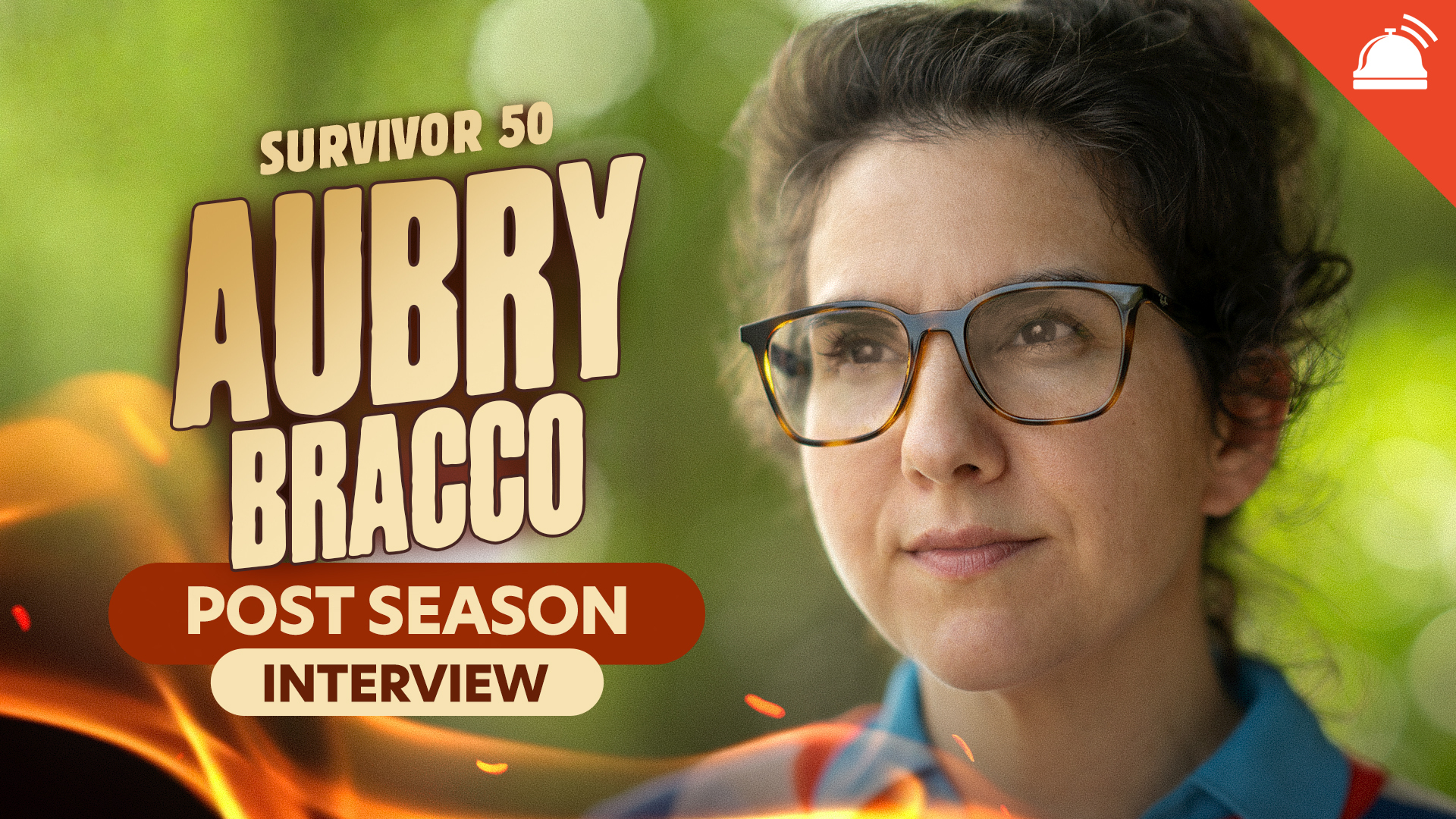
 Survivor 50’s epic journey comes full circle as Rob Cesternino sits down with newly crowned winner Aubry Bracco for a post-finale deep dive into the game's most pivotal moments and personal growth. In this special post-game interview, Rob and Aubry rewind the clock on a season defined by second chances, high-stakes narrative battles, and her own transformation from the edge of defeat to Sole Survivor.
[00:00:00] Sehr gut, sehr gut, sehr gut. Sehr gut? Wieso Steuer ist sehr gut? Das sagen ganz viele. Wer sagt das? Stiftung Warentest, Computerbild, Focus Money, Chip, Finanztipp, such dir was aus. Mega, aber das ist doch bestimmt kompliziert. Nö, einfach Foto von der Lohnsteuerbescheinigung machen und fertig. Klingt sehr gut. Ist sehr gut. Mit Wieso Steuer bis zum 31. Juli abgeben. Du bist laut, bunt, schrill. Du lebst deinen Traum, bis du auf den Wohnungsmarkt kommst.
[00:00:28] Da heißt es plötzlich, sei realistisch. Vergiss es. Die Realität hat deinen Traum eiskalt gekillt. Schwäbe Schall sagt, start dreaming again. Deine Träume sind nicht zu groß. Die Welt hat nur verlernt, groß zu denken. Also make it crazy. Make it bold. Make it you. Mach Bauspahn zum Schlüssel für deine wildesten Ideen. Let's make it real. Mit Schwäbe Schall. Unsere Empfehlung für deinen Podcast? Frisches Obst und knackiges Gemüse von Aldi. Immer gut.
[00:00:58] Immer günstig. Immer vielfältig. Kurz gesagt, Frische für alle. Zum Aldi-Preis. Diese Woche Mini-Wassermelonen. Das Kilo für nur 1,29 Euro. Oder Nektarinen. Die Ein-Kilo-Schale für nur 1,89 Euro. Entdecke jetzt viele weitere Angebote in deiner Aldi-Nord-Filiale. Und weiter geht's. Einfach lauschen und genießen. Aldi. Gutes für alle.
[00:01:22] Hey, everybody. What's going on? Rob Cesternino. And we're blessed today because we're here with the winner of Survivor 50 to talk all about her experience. Please welcome the reigning champion of Survivor. It's Aubrey Bracco. Woo, Rob. Thank you. That still feels very strange. Surreal.
[00:01:52] Thanks for having me. It's just so surreal to be here with you to talk about your wins still. For me, I'm sure it must be surreal for you. We happen to be in the midst of a Korong rewatch where we watch, you're looking at your baby pictures, we're watching your origin story. It's so incredible that it was 10, exactly 10 years it took you to get back and to win and excited to get the chance to talk to you about it. How are you doing?
[00:02:23] Rob, I'm great. I'd say it's finally started to slow down and I'm kind of getting back into normal life, working with my clients. I mean, it's definitely a little bit jarring. You probably can attest to this. It's like, whoa, you're going at warp speed. And then it's like, here's life. So it's been great. It's been nice to have a clean kitchen again and have my laundry folded. I'm not perfect, but I'm a little more. Yeah, the little things. It's very nice.
[00:02:47] Anyway, so let's go back through your experience here with Spark Physic. I think that as somebody who has watched so much of you recently, you always have such interesting thoughts and ways to frame things. Could you talk a little bit about how you looked at this experience to go back for season 50? Yeah, I mean, I never thought I was going to go play again after season 38. Everybody heard that interview. That was rough. That was ragged.
[00:03:16] And that was real. And after that, I really did take myself away from the survivor community. I did a lot of work. I got to the root of anxiety. I got to the root of like, how much do I really care about what people think and all that stuff? And I just kind of like learned to get in touch with myself again. And so when the call came after I talked to you and T-Bird, I never before that conversation, I was like, whatever, this is over, never again. And T-Bird brought up 50. And I'm like, no way. And then I got the call.
[00:03:43] And I was like, whoa, am I going to do this to myself? Am I going to do this to my family? Or am I going to look at this as an opportunity to kind of rewrite or reframe or give another shot at this game that I love that I've stepped away from? And so I realized that I really did have the latter attitude. And I was ready to like take on the challenge and not let it happen to me, but do it as like the me that had had a chance to get grounded and step back. So it really was.
[00:04:12] It was 10 years and two days, I think, was the difference between the Co-Wrong finale and the 50 finale. I was 30 the first time the votes were read. I'm 40 now. And it just felt like a life chapter and like just such a blessing and a gift to get to rewrite like that absurd ending in 38. I mean, it was wild. Yeah. I feel like it must have been so surreal for you like as it was happening, maybe more so as the votes were read. I wouldn't know.
[00:04:43] Where did it really hit you more right after it happened and you felt like you won or after they announced the win? You mean in Fiji or LA? Yes. Oh, definitely in LA. Like I, here's the thing. When you come so close, I never allowed myself to believe I had won. I didn't care what the betting market said. I didn't care what rumor, the rumor said. I needed to see it written down.
[00:05:10] And so I think it was as I was sitting there and Jonathan and I were coming to the realization. I was like, this is wild. Like, I can't believe this is happening. That was surreal. It was also surreal just getting to the final three again. I had a lot of like panic actually when that moment was happening. I was like, I should have gone out of four. That would have been easier than getting to the final three again and losing. So I'd say the most surreal was that final four win and like the fear of losing again. And then when it was being read.
[00:05:38] You know, there was a lot of discourse about the betting markets, as you mentioned, and how you were such a prohibitive favorite. Did that take anything away from the experience in that feeling like instead of it being as much of a surprise for people, that maybe some people were seeing it telegraphed? I don't know if I'd say it took away from the experience, but I did keep having that anxiety
[00:06:07] of like, I mean, it all sums back to that anxiety and having been through it before. And I was like, what a cruel joke. If the odds are this good and I freaking lose Survivor again, that would be like gnarly. So, uh, if anything, it made it like a little bit more of a stressor, but I've also learned to live with that kind of sitting in the background at all times. So I kind of was like, it's just another thing I can't control.
[00:06:37] Let it, whatever. It's absurd. You seem like that from where you started in your Survivor career back on those first couple of days in Survivor go wrong, where, you know, there's, there's heat exhaustion, but then it seems like that you're also having some panic over, oh my God, am I, is it all slipping away because I'm not feeling well?
[00:07:02] And to get to where you seem to be now, could you speak a little bit to how, how you were able to do, to get there? Yeah. I mean, it's, I mean, that's something for a 10 hour podcast, but to keep it short, like I did, I went to a therapist on my own for the first time in my life after co-wrong, I realized it was an anxiety thing at the time. I thought it was like this heat exhaustion. I didn't even realize it was anxiety.
[00:07:31] And I realized that had this very achievement oriented background, like prep school, Ivy league school. And I really had this mentality that I was raised with of you control the thing. If you work really hard, you will arrive and you, you will be rewarded for that hard work. And I'd say losing co-wrong was the best gift I ever had because it taught me you can't control everything.
[00:07:56] And then I'd say in the seven years between 38 and 50, all of my work has been with entrepreneurs. And the whole thing, if you're an entrepreneur is how do you recover from failure? You fail fast, you pivot quickly. My friend, Chris Savage, she's the CEO of Wistia, just a video software company always says, and he's right. And I learned that like an F up is actually a gift because you can, you can adjust more quickly. And I think once I realized that like, you don't arrive at anything, you can't control everything. Like people will always have an opinion.
[00:08:26] You can decide what opinion to take. You don't have to take them all. Like I just learned to like be more in tune with my own voice, be more grounded and listen to myself. And then just like kind of take everything else with a grain of salt and take failures as gifts. I know that's like very existential, but I really grappled with those things. And like losing is the best thing that ever happened to me truly. Yeah, it's an amazing lesson.
[00:08:49] And I feel like it's also the cure to losing where that once, once you have a loss, I think it's the ability to put the loss in perspective that helps you move on from the loss also. I mean, I mean, it can't, it can't define you. It can really feel like it can. And I let it, I mean, I spent years of my life dreaming about the final tribal of 32, like what could I have done differently? And then I started to realize like sometimes it just is what it is.
[00:09:19] I mean, you get very spiritual and wacky and woo woo about it, which I have, but yeah. Yeah. And most likely the answer is there's nothing you could have done differently. In that moment and that time and place, there's nothing I could have done differently with what I knew then. But with all the lessons I had, which I was very open to feedback after 32. And then I like really internalized what I wanted to internalize to that in the interim
[00:09:45] and the 10 years that allowed me to have different tools and a different time and place to do things differently, which I did. You know, we have your game in Survivor Call Wrong and then also this winning game that you have in Survivor 50 and in some ways now you've become the Michelle and that Jonathan is probably feeling the way that you were feeling maybe after Call Wrong.
[00:10:10] Have you and him, if you're at liberty to discuss, like had those types of conversations? Yeah. I had the conversation about like Jonathan and I get along very well. We talk throughout the season. You're in a very unique spot at the end and Jonathan and I knew it was between the two of us. And I'd say it was in like April. I said, you know, I'm not entirely sure. And he wasn't entirely sure, but it seemed he thought it was leaning toward me.
[00:10:38] I said that if I do pull it out, it's going to be a similar dynamic in terms of the groundswell that I think Michelle and I had. And this time I will probably be more in her camp because the game I played wasn't as much of a one that can be shown on TV. And the one that you played is one that's more of like dominant moves and it's more of a resume and that's shown more overtly in a story that can be told on television.
[00:11:06] So we did talk about that. And we have talked about that, but that doesn't mean like the sting of sitting up there and losing $2 million is going to be any less. And I don't hold any ill will toward Jonathan whatsoever for his reaction. That's truly his reaction. We've talked since. We're fine. I'm actually like, let people be more vulnerable and emotional about what Survivor really feels like. And I don't always think that we're willing to accept that from people.
[00:11:33] So you mentioned in the finale that you practiced on doing some motion before you went out there. I know you have also said that you listen to a lot of podcasts. Can you speak a little bit more to the work and the prep you did prior to Survivor 50? Yeah, absolutely. So, I mean, I was stalking around, seeing what the rumors were for sure. I got that little Etsy some motion game. I got the Fitz Tower on Etsy.
[00:12:02] I was doing a little more puzzle work. I tend to get panicky with puzzles. They are not my thing. Just because I wear glasses doesn't mean they're my thing. Please. And I did, once that came out on like that Friday, like the cast was leaked, I downloaded every single exit interview that you did with the players that were on the season. And I listened to them in the pregame as I was sitting there with my no Wi-Fi iPod, sitting around watching people in the jungle.
[00:12:28] I wanted to understand what people's regrets were, where I think they might be different now, where they had potentially evolved, how they saw the game. And I was studying people and I was studying the new era because I had taken a break from Survivor. I was, since I was called in November, I was studying the new era the whole time. Was it helpful to come in with that information? Because I think that sometimes also you can get sort of boxed in of like, okay, this is who this person is. And it's not what the actual person is like when you get there.
[00:12:58] I would say that information was helpful to an extent. You're right. Because if you kind of put permanent marker on it, you're a little less willing to kind of like erase and rewrite your version of that person. Um, so I definitely did take it kind of with a grain of salt because you, you can really like over plan and everything topples. You know, you had mentioned in the past that on the way to Fiji, you also got sick.
[00:13:24] And I'm not gonna, I'm not gonna say who you said, uh, got you sick because, uh, we don't need to, but that you said that you were not feeling well in the very beginning of the game. Yeah. And I mean, I'm not sure it was that person, but I had some kind of like upper respiratory thing. It was like the second day of the pregame and I felt like my lungs were glued together and I was like gagging on the, on the barge. When you come in, I got like, you know, the bilge or whatever it's called, like the exhaust off the boat.
[00:13:52] And I was coughing my guts out and I, you know, I felt like crap for the beginning. I mean, that's still responsible for my own actions and how I played at the beginning, but like, I felt, I felt like crap. Yeah. And so did you feel like that, that held you back in the early days of survivor 50? I think it didn't make me my sparkly self, but I wouldn't say that like necessarily impacted things.
[00:14:17] I mean, something that's funny is I got a lot of comments about my demeanor at the beginning. I'm like, Oh, my face is my face. But like you do, you do exude a certain energy to people. And I'm sure if I was a little spark, more sparkly, that would have been helpful. But the beginning of the game was more complicated than that for me. I got on the wrong side of Batuu very quickly and it was a hard thing to recover from.
[00:14:42] And I didn't think that my actions were like as catastrophic as it appeared that they were when they went through my bag, Rob. Yeah. Did you know about that prior to that episode airing? Nope. I didn't know that they had gone through my bag. No one had told me that they'd gone through my bag. I had a decent like ability to communicate with everybody in that tribe. I was vibing with Q.
[00:15:10] Q told me the day before the swap that he wanted to throw the challenge so that we could vote out Angelina. So Angelina and I were on the bottom. I had a really good rapport with Stephanie, except Stephanie told me I didn't commit fast enough. Angelina and I were good, except that I felt like Angelina was starting to speak on my behalf because she was like, I'm your number one. Let me speak on your behalf. And then we all saw Genevieve and I, like I did try to work with her.
[00:15:35] I approached her that, that in that conversation, we kept talking every night, but like what she would say to me didn't line up to how I felt around camp with her. And she once said to me that like the island wasn't big enough for her in Surrey. And I like knew deep down in my gut, even though I wanted it to work. I'm like, Ooh, this isn't good. So that's my ramble about Vatu. I didn't know they went through my bag. I knew that it was murky and murky is not a good thing, but I like didn't want to believe it, if that makes sense.
[00:16:05] And then when I saw them, I was like, Oh, this is bad. It's real bad. Mm hmm. Bad. But in terms of how I feel like you are looking at Survivor 50, where you are not necessarily trying to start as fast as maybe you might have been trying to in the edge of extinction, where you really were a lot more forward in terms of trying to build.
[00:16:34] Was that by design on your part? I mean, yes, it was by design that I wanted to have relationships that were more working relationships and not necessarily deep relationships. That was very important to me because something like in a deep relationship, you have loyalty with people. You have like the emotional support, you have the trust, but you also have like expectations and more visibility.
[00:17:01] And then there's guilt involved when things go south. And I wanted to stay in that pocket of having more working relationships. But I realized watching it back, like in 50, I was probably a little too slow. Like when Stephanie said, I didn't know who you were going to commit to. I was like, crap, that was a loss because I actually found Stephanie very easy to talk to. So it was by design.
[00:17:25] And yeah, I mean, we can debate about whether that worked at the beginning, but it did actually end up helping me in the post-emerge that I had done that. You know, there has been a lot of discussion over the course of season 50 over people who were talking prior to the game starting. From my vantage point, it seems like you get the call for the show. You're in the cast, you're out of the cast, you're back in.
[00:17:55] But it seems like that you are pretty much minding your own business for the months leading up to Survivor 50. And ultimately, you end up with the win. But do you feel like that that contributed at all to a slow start? It's so interesting. I angsted about the pre-gaming question, Rob. For hours and days, perhaps. Perhaps that contributed to the slow start.
[00:18:25] I'm not sure because I also think it ended up helping me because I do think that those relationships and people feeling that they were indebted to people ended up being other people's downfall. So yeah, maybe you could say it was a slow start. I'm not privy to every relationship that was kind of in the works, but I definitely felt on the outs very quickly. But this isn't your first season with returning players in your multiple adventures in the past.
[00:18:52] Do you feel like that it's the type of thing that has held people back from what you've seen? For me, in the way I like to play, I think pre-game relationships hold you back. I do. I really do. Because then people expect something of you. They expect things to go a certain way. And I think that the new era, I mean, and I will see with the open era, but I think in the new era and in returning player seasons where there tend to be a lot of twists, that
[00:19:21] you have to be receptive and open. And I think that people are less receptive and open to the unknown when they feel like they have something sure, if that makes sense. Yeah. Tell me a little bit about the part of the game where it's after the swap, but you're
[00:19:46] now linked up with Tiffany, but you're also hearing that, okay, well, Genevieve is actually putting your name out there. And you have the idol at this particular point in time. Were you prepared to go to a tribal council and play that idol? I was absolutely prepared to go to a tribal and use that idol. I mean, Tiffany validated when I said before that I could feel things were weird on the first try, but I didn't want to admit it to myself. Tiffany validated for me that my intuition was dead on.
[00:20:14] And I think I was working through trauma of 38 at the very beginning of the game. I didn't want to believe it. That happened in 38 where I didn't want to believe it. And then Tiffany was like, girl, wake up. This is not 38. You better believe what's happening here. And I did believe it. And I was ready to play that thing. I mean, I got there the first day of the new Kahlo and I felt comfortable with people one-on-one. Then I realized I had a conversation with Joe where I was like, Joe, I'm not in a good spot. Then Joe went to Colby and Genevieve and then Genevieve and Colby are pulling people.
[00:20:44] Genevieve's pulling people into the jungle one by one. And I'm like, oh my gosh, here comes the poisoning of the well. And I just knew that Genevieve wasn't with me. I found it to be like very weaponized empathy when she said we thought you weren't feeling well when she's coming for me looking for the idol in the jungle. For me, she couldn't have made it clear that she didn't want to work with me. And I found it like I found it personal. And I was like, got to play this thing because she was so talented, Rob, at like controlling
[00:21:12] the narrative and social framing of the two tribes I was on. She's so talented at it. I was like, everybody is enamored and she is the center of this tribe. And I, except I'm not in it and I'm not welcome here. It was like when you go to a party and you feel like you're not welcome. It was that sensation. And hell yeah, I was going to play that idol. There was no way I wasn't. And I didn't even tell Tiffany I had it. I was holding onto that thing. And then I never had to use it.
[00:21:39] So I'm glad you brought narratives up because it feels like at the beginning of the game, you're saying that you were the victim of narrative warfare. Oh my gosh, I never think I'm a victim ever. That's actually something in Survivor that I have always taken accountability for my actions. I don't think I'm a victim. I think I got on the wrong side. The recipient of narrative warfare. Don't you love how I'm like, I will not accept the word victim. I do think that Genevieve was very talented at that.
[00:22:08] Yes, I do think that I was on the losing side of the narrative at the beginning of the game, 100%. And it's so funny in retrospect, thinking about our dear Christian Hubecki, when he said that this game was all about narrative warfare. It was. It's the whole game. But narrative warfare and Survivor happens in the big sense for a season. It happens pre-merge. It happens swap, post-merge. And then it happens in all of those little moments throughout the day.
[00:22:34] And I definitely was not winning in those little moments throughout the day on Vatu and the new Kalo. Do you think that narrative warfare was something that was really specific to this season? Because everybody is coming back with these legacies and these incredible legendary runs in the past. Or do you feel like that happens in every single season? Great question. I think it happens in every single season. I think it might not be as overt.
[00:23:03] I think that it was really like something day one on Survivor 50 when you're on the mat and Jeff calls on coach. Like everybody's story's there. Everyone's the hero of their own story. A hundred percent. And that's something I thought about coming into it. Like everyone here is trying to rewrite something. I was trying to rewrite something too. But I really did go in like everyone else is the hero of their own story. And I just want to be the container. And I want to hold space for that.
[00:23:32] I don't want to jam my narrative down their throats. I want to work around them if that makes sense. Like I don't think we talk about for returning players how much it means to them to have their story. Be the story that's like front and center whether they're aware of it or not. And in my work, like I'm a marketer. I work with CEOs. I work with entrepreneurs one step behind the scene. And something I'm always thinking about is like, it's not about my story. It's about me elevating yours.
[00:24:01] And that's something I did throughout the whole season. And it's so funny because I look back at my application for Survivor in 2014. And I remember Cassie was like, you'd never win with that strategy. And I think I did, which is that I wanted to remain on the fringe and let everybody else kind of have their stories happening so I could observe what was happening. And then go where I needed to go and navigate around their stories and their headlines. Yeah. Who in particular do you feel like that you did the best job of that with?
[00:24:32] With their stories? Yeah. Making them, you feel like that you were helping them write their wrongs. I mean, I think Ozzy. I think that was a big part of that moment with Ozzy where I, I mean, that conversation where he was kind of telling me his plans. Was more extended than you saw. And I kept validating it. I was like, yeah, you're right. Like, I understand it. Like, this is your season. I think that was it.
[00:25:02] I think Joe was a big part of it. We didn't see a lot of my relationship with Joe, but I was very aware from the swap at New Calo that Joe and I had been in the same position. We'd lost our first season. We'd watched it on TV and like a week after we watched it, we were in a new game and you don't have time to process your experience until you've watched it and then he had no time. So I felt like I knew what Joe's story was and I knew what it meant to him. And I had a great working relationship with Joe throughout.
[00:25:31] And then I think I kind of like understood, I wouldn't say Rick Devin's story, but like Rick Devin's is always writing a story. And I know that he likes to always be writing a story. So I was very aware that like Rick was writing this story of Devin's and Survivor 50. And I was aware of how he likes to write. So I'd say like those are just three examples. I mean, I kind of had an idea for a lot of people, but those three.
[00:25:56] Did you feel like that in your line of work, you felt like you like keenly understood every other player's brand and what they were looking for out of the experience? Oh, I don't want to say that I ever understand anyone completely. I don't want to claim that. But I think I took some time to study that. I mean, I do like figuring out why people are the way they are. And I think I did do thinking around that. And I did try to listen along the way.
[00:26:25] We saw you have a pretty good relationship with Coach. It didn't ultimately bear too much fruit in terms of the actual votes. But what was that relationship like? Oh, my gosh. I love Coach. I had like a similar rapport with him like I did Debbie Wanner at the beginning of the game. He is larger than life. But Coach is really just a person who wants to help people be their best selves. He wants to be heard.
[00:26:55] He wants to be understood. And he's done a lot of work like transitioning from being misunderstood to like not caring about that. So we really like bonded over like the misunderstood. And there were a lot of people who are survivor finalists who'd never won on the season. And we bonded over that. Yeah. Yeah. There were a lot of people in that camp. Another person like that was Chrissy who we didn't I think that maybe only one time I can remember you having an on screen conversation with her.
[00:27:23] Did you have a good relationship with Chrissy? I would guess that there probably that there would have been. I feel like you both played in the 30s and had the same outcome of losing at a final tribal council. Cool. Yeah. It's funny. Chrissy is someone who I am like I've been great like you know at the finale great chats out of the game.
[00:27:45] We would have like chats about life and real life things like being a parent what she's gone through kind of on some of the personal and some of the health issues on my family's end. But in the game she is the one person where I didn't talk game with her until the night she went home. I do not know what it was. Yes I do. She was like married to like coach in the honor and integrity thing. And she didn't really have time for me in the game until she kind of needed me.
[00:28:13] So that was the one person where I didn't quite have it. Everybody else I felt like I had a working relationship with. So you get to the blood moon and the blood moon is this you know you've just been in this not great position for the whole game.
[00:28:29] And then you finally like the the fates have flipped and now here you are in this small tribe and you're matched up with Christian and Rick who you feel like that Rick is in the idol even though it was Christian. And you're here with Joe who you have been talking to at least and that must have felt so good to have gone from being at the bottom to being in this good position.
[00:28:57] I mean yeah it absolutely felt it felt good and in that moment my goal was really to show Christian and Devens that I was willing to let them lead. A lot of people were like why didn't Aubrey have more of a voice at that moment. I thought it was really important I had no social equity that I let Christian and Devens who kind of like taken me in they like actively took me in at the merge and like hey I'm not kidding you this is what I want to do.
[00:29:27] Um and I I wanted them to kind of like do their thing and I wanted to observe them and let them lead that I didn't play the idol like they wanted me to tonight. Um but that's the other part of the story. Well let's talk about that part of the story because you really were the center of attention which is probably not what you wanted when you get to the 17 person merge. And then they expected you to play the idol and then you told everybody you forgot.
[00:29:54] Yeah not my finest moment very much my crossing out Julia and writing Pete moment for sure some patterns we all have patterns Rob. Yeah I have questions about that vote too for another time but we can keep going. Yeah I knew I was safe I wanted to hold on to it. I spewed out the first thing that came to mind. It was not the right thing to say absolutely not.
[00:30:24] Yeah. But I will also say this man was it frustrating at that merge. I had kept it quiet that I had that idol. Everybody knew. I mean that. And I I do think two things can be true. We often forget two things can be true in Survivor. Yes I made a stupid move saying I would play it and not. Also why was I the target with that idol and Ozzy and Rizzo wasn't weren't.
[00:30:51] I mean I think it was more than me just saying I was going to play it and not. Like I was kind of this like person floating around they didn't know where I stood but anyway. Yeah but you very keenly at the next vote when D got voted out you stood up and you played the idol and you talked about how hey look the and I'm sure you have the exact quote. But you compared it to having the scarlet letter the idol that everybody knows about.
[00:31:19] And yeah I said well this is bad why are you doing this. But I think it really put you on this trajectory to get to where you got. I knew it. I knew I had to do it. If you keep not playing that thing I'm not Rizzo in 49 all right which made me laugh when I saw 49 and I hadn't seen it yet. Absolutely had to play that thing. I had no social equity at the merge and if there is a discrepancy between what I'm saying and what I'm doing I'm going to keep burning people. They're going to feel like I'm clowning them. I can't do it. I can't do it again.
[00:31:47] And the other thing too I thought about a lot in 50 is I was given the feedback in 32 that I was very cagey at tribal council and people didn't see my game. So I was like listen I'm going to narrate. We're talking about like I was on the wrong side of the narrative pre-merge. I was like what I have to do now to gain trust is to play this thing. And I'm going to narrate this so clearly that everyone in this huge tribe sees exactly what I'm doing. And I did it. And I do think that was like the turning point. I think my game started there.
[00:32:14] Yeah it really goes on the upswing from that point. And really that immunity idol that people know about it's a little bit like sort of like this homing beacon where that thing everybody is going to be continuing to talk about you and figuring out how do we disarm Aubrey. Oh yeah I mean it was I would have been the target until I was out. And I did not want that to be me.
[00:32:40] And then I very quickly realized there were other people who were like the bright shiny objects in the ocean that was the merge tribe. And that by getting rid of the idol I could kind of like what is like Homer Simpson into the bushes. Into the back of the bushes. Yeah. Beginning of the merge. And so you remain in a bit of danger when you're paired up with Rick Devins.
[00:33:04] And then they ultimately are going to go to that tribal council where he's going to pull out the fake idol which he I'm sure did not loop you in on. Can you talk about your experience with that at that double tribal council? Oh my gosh. What an afternoon that was. I was listening to Christian's chat about that that afternoon. That was wild because we were waiting for the cavalry to come back. Sari Christian did do a lot of work.
[00:33:32] A lot of work to save me and Devins on that vote. That's when Chrissy approached me about going for Rizzo and Emily. I mean I will say I did not have all that much control. That was probably the least in control I ever felt. I mean it was it was absolutely wild. I do just remember sitting there. I could be wrong. I remember Rick saying to Sari do I need to do something. And she said yes. And then he went and got it. I think I'm correct. I don't know. But that one was like a blur.
[00:34:00] And it was it was really cool because it was like me seeing Rick Devins back to old Rick Devins. And so I felt like I got saved in that one which I was like thanks guys. I just played this idol that you wanted me to play. I played it now I'm in trouble. And then that vote was also like I started all over again.
[00:34:17] And the thing that ended up being a gift for me and I feel so bad because Christian Hubecki is like one of my top people from this season is that after that vote Christian had done so much work to save me and Devins that it really thrust him to the forefront. And the inner dynamics of like the tribe where he became like the tallest poppy in the field.
[00:34:41] And I felt like that was my key to break away from that group of Emily Devins and Christian. Yeah. We see you talk to Jonathan right after that vote. And you talk to Jonathan about how like hey I'm not necessarily with them. I would like to work with all different types of people. So don't assume that I'm part of that. Absolutely. Yeah. So why I bring up the Christian thing is that Christian had worked with Jonathan in that doubles twist.
[00:35:10] And I had also noticed that Christian is amazing at going one-on-one and developing deep relationships. You feel so warm and fuzzy with Christian. He's truly the best. I love him. And I could tell that like Jonathan felt really comfortable with Christian and felt really burned that Christian did not loop him in on that vote. And so I was like all right. I know Christian had done a lot of work. There's this friction between Christian and Jonathan. And Joe had told me the people in the middle.
[00:35:39] They weren't really the people in the middle. But like Joe had this thing where he kept talking about Camilla. And Kyle came out at the 11th hour and took him out. And that's how he saw Devins, Emily, Christian, and then me because I was near them. So I'm like friction between Christian and Jonathan. Then talk to Jonathan and kind of like get away from Christian, Devins, and Emily. Yeah. You know, we haven't talked too much about Sari yet. And I think you have a conversation with her at the early part of the merge, right? When you all get there.
[00:36:09] We also see her light up when Christian and Rick tell her that they've given the idol to you. She's a part of that cavalry that comes in and helps save you and Rick ultimately. Could you just talk a little bit about the working relationship you had with Sari? Yeah. Sari and I have like this special intuitive thing. Like, you know, we don't text every day. We don't talk every day.
[00:36:35] But we have this like understanding of how the other moves and like a deep, deep respect. Like Sari means a lot to me. And I remember at the merge, she came to me and she goes, Hey, I heard you're going around telling people I'm a mastermind. I hate that. I'm like, ooh. I said, listen, Sari, they know we play together. They're concerned about the two of us. I had to say that like to distance myself. She's like, okay, that checks out. That makes sense.
[00:37:03] And she said something to the effect of like, if this is going to work, we can't talk to one another. And I know what Sari means. Like you watch Sari in the season. I believe Joe described it as like Sari is like sitting in a garden and all of a sudden, like the tulips will start talking to the birds and the birds will start talking to the daffodils. And it's a name. And all of a sudden that person is voted out. I understand how Sari moves. I don't always know how she does it, but we have this understanding where I could look at her and be like, Sari, you should talk to this person right now.
[00:37:33] Or I'd say like, yo, Sari, why are we not looking at Stephanie? Or like, hey, I just came from that conversation. I forget which one was it. Like, oh, when Stephanie went home. Like what you saw that talk with me, Devin's Jonathan on the beach and Ozzy's name came up. I knew that Sari body language wise, I could tell her and Ozzy were close. I went up to Sari first thing and I said, and I said, Sari, they want Oz out. I don't want him out yet. So that's the kind of relationship I have with Sari.
[00:38:00] I could just give her little nuggets and I could feel where she was losing faith in people. And I just kind of plant a seed and walk away. That was our relationship. And I feel, yeah, it's so funny, Rob. No one would believe me. But I remember going in when I saw Sari's name on the list. I said to my mom and sister, I was like, oh my gosh, I'm going to vote Sari out at six or something like that. Like that's how far it can go. And that's it. That's it. I mean, that's where she gets off.
[00:38:29] That's her stop. Yeah, it is. And I love her. I do think she's an incredible player. I love her. Anyway, I could go on for years. You know, Mr. Beast's coin ends up being of particular significance to you, who ends up being the biggest recipient of Rick Devin's bravery. What were you thinking in the moment? Oh my gosh, in the moment. I mean, I wanted to hit, but I also was like, oh, should I have done that? Because I thought it was me.
[00:38:59] And I knew that if it wasn't Devin's, I was next on that side, perceived side at that moment. So I was so torn, Rob. I mean, I thought it was an amazing twist and I had hoped I'd done the work. So I was like very torn. But I also knew when I saw that light in Devin's eyes, I'm like, he was born to flip this thing. And I like genuinely, I mean that. And I talked to Tyson on the red carpet after 50.
[00:39:26] Like there were moments this season where I felt like in my gut, I just knew. And I like listened to that this season. And in that moment, I didn't let my head override my gut. But I was like, Devin's has to flip this damn thing. Even when things weren't clear. And I think that's like, even talking to you about the pre-merge. Like even when I talk about it, some things were like not clear. And it's like, as I started further in the game, my intuition clicked on again, which was a relief.
[00:39:54] Because that was what I felt like I hadn't go wrong. It was my sixth sense. It was like the quiet moments. When that coin flipped and I was like, Devin's needs to flip it. I'm like, clearer than ever. Intuition's here. He flipped it. Let's go. I'm reveling. Well, after Rick flips the coin, I believe we get to the power broker day. And I would say, tell me if I'm off base on this, maybe the most important day in the game.
[00:40:23] Yeah, the power broker game, power broker day. And I think many players would say this. I think Christian even said it in the interview you did with him. I mean, determine the entire season. The way things were kind of divided or the pieces were on the table at that point, it did create, like it galvanized the final four of that game. And I still firmly believe that. I mean, we, I saw Jonathan won that power broker advantage. And I was, I was devastated, honestly, at first.
[00:40:51] I had done my work with a, had to have a working relationship with him, Ozzy, Joe, and Rizzo. But those four guys were all hanging out that morning. They were starting to bond. That was starting to coalesce. And when I went on that walk with Ozzy, I was like, oh my gosh, just listen to him. Just listen to him. And then it started to come together where Rizzo was catching on, like this isn't good for my game if he's here.
[00:41:20] And that changed the whole trajectory of the game. And I feel like I played my role perfectly that afternoon. Like I played dead like a pro. I don't think I've played dead like I did the night Ozzy went home since Tony went home second in Game Changers. And it was me or Tony. But I knew the role I had to play and I thought I played it well. And I know, like, they never trusted me 100%, Joe and Jonathan.
[00:41:49] But I showed them that I was willing to stand by my word. And it worked. So when this is all going on and you go to that tribal council, how confident are you that everybody's going to do what they said they were going to do? In that tribal council with Oz? I believed those guys. I mean, I also, I believe them because like Jonathan had been talking about getting Ozzy out.
[00:42:17] Just because you think it though doesn't mean it's like you're the only one who thought it. But Jonathan had been wanting to do it. And I'm like, okay, Jonathan's going to do it. And then I knew that Rizzo and Joe were good. So I knew they were going to vote together. And I knew they were. It was just a matter of like, is Ozzy going to play this thing? And I was like, oh my God, I feel like there were so many times for him to do it. And then he just didn't. And it was like a miraculous.
[00:42:43] Was there any part of it of other than playing dead where you or anybody else did anything to get Ozzy to not play the idol? Yeah, I think it was just like making Ozzy very comfortable. And I think it was like, I did a lot of work on my relationship with Ozzy before that vote. I cut off a piece of his hair and he buried it in Fiji because we wanted to leave a piece of him on the island. We talked a lot about our work.
[00:43:11] And this is where I actually like do feel badly as a human. We talked about how our intuition had been destroyed from not playing an idol before. And how much, well, I feel horrible saying this, how much work we'd both done to recover. And I really respected the evolved Ozzy as I do. Like Ozzy is someone who I absolutely love. He's willing to change. And we really bonded over that. So I think it was my willingness to hear him out.
[00:43:37] My willingness to validate his story and then me showing him in that moment that I was fully at peace because I had no control. Like I was the person that Ozzy needed in his story at that moment where not only did I like play dead, but I validated him. And I lined up with the Aubrey that he'd known throughout the game. Like something that I did in this game that's like very nuanced is I thought a lot, and you may have seen this in 32.
[00:44:05] It was like in 32, I was like, what's the move I can make? Like I didn't think about like, was I too close to the person before I voted them out? And then I tried to prove myself at the end. Like I think something you have to do is you have to minimize like the discrepancy between who they experience in the game and who tries to make the case for a million or $2 million at the end. And what I mean by that is like, I wanted Ozzy to see Aubrey throughout the game. And then that's the Aubrey sitting there at the end that he has to vote for.
[00:44:33] And in that moment with Ozzy, I was the person that I was the entire game. I didn't seem any different. I didn't act differently. And then that was the person who showed up at the end, if that makes sense. Yes, that you are not trying to be. Yeah, it does. I don't know if I could articulate it back to you as well as you did. Yeah, because I would say this, like there were people who voted Ozzy out that night. I would I would say this.
[00:45:02] Don't be mad at me, guys. This is just what I saw where they had done a lot of work to have a personal relationship with him. That felt a little above and beyond what it needed to be to then turn around and vote him out. I was just like the same Aubrey. Like it's like the whole thing of like how close are you going to get and how much does it hurt? Yeah, it's like I kept my relationship in the pocket. Yeah.
[00:45:29] Did you have much of a relationship with Ozzy from Survivor Game Changers? My relationship with Ozzy and Survivor Game Changers is that the night he went home, he was dragging bamboo on the beach. And I said to him, Ozzy, we should really talk sometime. He said, yeah, we should. And then he got voted out. But that story I brought into 50 and I was like, Ozzy, I always feel like we were a misconnection. I really feel like there was something there for us. It's like faded that we work together. So that was like kind of a fun jumping off point. And he really did. Sometime, right?
[00:45:59] Yes. Yes. So it did. It was a good kind of jumping off point. Did he tell you about the dream that he had prior to him being voted out? You know what? I don't remember if he told me about the dream. I don't. I think you would. Yeah, I don't remember that. That series of days felt like one very long day. He didn't.
[00:46:24] I mean, the other thing I would say that I did in that vote was I remember going up to Rizzo and Rizzo was seeing what I was seeing. Like, whoa, it's like South Pacific Ozzy is here. What's going on? And Rizzo had said to me, like, you need to hard sell Joe. Like, Joe's not bought in on this. And I did. I went up to Joe and I was like, Joe, like, I understand how you're approaching this game. I understand what you're afraid of this time. I'm telling you, this is where game. It felt like me with Ty a little bit.
[00:46:53] I'm not saying I'm the only one who voted out Ozzy for the record, but I think I played the role I needed to play. And I felt as though I had hard sold that to Joe. And that did help kind of tip the scales because Joe's a very loyal guy. You seem to be keenly aware of who you could beat in the end and who you couldn't beat. And it seemed like that you had, like, the best read out of that out of anybody that was there. Were you feeling that, too, when you were there?
[00:47:23] Yeah. I mean, Rob, after the Ozzy vote, it was so obvious to me who had to go home. It had to be Devin's. Even Jonathan was like, I found that guy kind of annoying and now I really like him. And then, of course, Sari has to go. And Tiffany just, like, I mean, her upward trajectory was really, I mean, it was stunning to me. And I thought that I could beat the guys I was at the end with. I thought I could have beaten Rizzo. Like, there was a discrepancy.
[00:47:52] Rizzo's, like, the biggest surprise watching, but not in that I felt like Rizzo was doing more than we were seeing. And he was. I didn't want Rizzo next to me because his storytelling was so good. And his story, he's one of those people who's going to, like, whip out a secret at the end. And you're like, oh, my God. He's a yapper. He's a yapper. I really thought I could beat those guys. I really did. But it's interesting, at the final seven, here you are.
[00:48:17] And there's probably three people that are going to give you trouble in the final travel council in Rick and Tiffany and Sari. And there's three people that you got a pretty good shot against. Yeah, I'm including Rizzo in that. Rizzo and Jonathan and Joe. And the three people that are going to give you problems are the three next people to go out in Rick and Sari and Tiffany. Yeah. Yeah. Yeah. And I will say, like, I think that Rizzo and I saw the game similarly.
[00:48:45] I think Jonathan and I saw it similarly. And then I think Joe did. I think we all needed they knew they kind of needed to go. But I also, like, along the way, I felt like I started, like, I kept this game. I would always, like, plant my idea for a couple of, like, what needed to happen, a travel or two ahead of time. I'd be like, there aren't enough pieces on the board. We need to do this. Or, like, well, Tiffany's really kind of, like, coming out of nowhere. What's going on with that?
[00:49:11] So I felt like I did my part of, like, planting along the way of where I was positioned. I mean, even to the point where I told Joe that if he won the final three, I don't think those guys would have taken me if I'd lost emotion. But I had been planting with Joe for a while. You know, Joe, do you really want to split boats with Jonathan at the end? Like, I don't know if that's a great move for you. So I did start telling my story along the way. You know, you really seem to master the new era game.
[00:49:40] And you said you had not really been watching as much over the last couple of years. It seemed like for where you are as a player, it really seemed like you played at the perfect time to play the type of game that you came into Season 50 to play. Thank you. Yeah, I really feel like I did. I feel like that keeping those working relationships in the pocket is something I have to do every day.
[00:50:07] It's something I've learned in my work and I've learned from Survivor about keeping, like, that level of trust and working relationship the right place. I do work with all different kinds of people in my day-to-day. I can work with anyone. Like, I think if I went back to 32 now, like, what would that game look like for me? Probably incredibly different. Like, I know how to get along with everyone. And it really did just kind of—I felt like I was very aware of my timing and trajectory within the game.
[00:50:37] And I think my meta timing and trajectory was right. And I do think, like, I guess Kyle said, like, Survivor's one in the fringes. I think it's very much one in the silences and the things you don't say and restraint. And I've learned restraint over the past 10 years. In a world that is everybody's talking and everyone has an opinion, I am more than happy to sit back and not have any of those and just let things play out.
[00:51:04] And I think, like, I'm not trying to downplay how anyone played in 50. But when I have talked to people who don't really watch Survivor, I said—I feel very arrogant saying this. This game was actually very simple. It was letting the type A personalities and egos tell their story and do their thing and keeping your mouth shut. Let them all fire at each other and then just duck your head.
[00:51:28] And I felt like that worked in 50 as a returning player season and then in keeping the options open and knowing what to do to have an option for any possibility in the new era. That's amazing. I mean, it's the news cycle thing, right? I just, like, shut the heck up. Like, maybe just be quiet. Maybe we all should. And then see what happens. I don't know what that's like, but it sounds like that is very correct.
[00:52:00] I mean, it doesn't make for good TV. Like, I am not—like, I know that I wasn't—people are like, what is she doing? What is she—I was often sitting back and observing. Like, I will tell you, I did not take enough baths this season. I did not leave camp. I watched everything happening. I watched every duo and trio and one-on-one.
[00:52:27] I knew there was more to Rizzo than we saw. I paid attention, and I think that it—I think it paid off. Yeah. I'll say it. Yeah. I think it did. I'd love to hear about how you approached the final tribal council. You come off of your incredible win in Samotion. And as somebody who has gone to a final tribal council and it didn't work out to have this
[00:52:49] opportunity to do it again, it must have been such a unique and maybe stressful experience to go back to final tribal council. Yeah, I was—I was—I didn't realize how traumatized I was by losing until I was sitting there preparing for final tribal.
[00:53:18] And it was highly stressful. I thought for years about things I didn't do right. And some of those things I'd done along the way in the game, like, I made a point—and Jonathan and I had talked about this. He said, you were very good in tribals at, like, kind of speaking up and then kind of blending into the background back at camp. So I had made a point, like I said, planting seeds and telling my story along the way.
[00:53:41] But at the end for final tribal, I mean, I thought about stuff like—I mean, I won Samotion, so I chose who went with me. I wanted to make sure I was with people that I could fight against. I can have a sparring kind of thing. I know I'm not so, like, warm and friendly and bubbly feeling. I'm not, like, rainbows and butterflies. I'm a little more direct. And something that was hard for me in 32 is, like, Michelle is warm and friendly and everyone's just, like, at ease.
[00:54:11] And I wanted people that I could kind of, like, spar with at the end. And so I think I chose sparring partners wisely. Something else I thought about is I knew Joe did not want to go to fire. I know he's a fireman. He didn't want to go to fire. And something—I made an agreement with him. I said, I will take you to the final three if you don't fight against me and if you promise to give me credit for my piece of the Aussie vote. And he agreed.
[00:54:39] And then we saw that play out in final tribal. So, like, I made, like, little packs at the end. I paid attention to how I was showing up. I paid attention to, like, how I was sitting versus the first time. Like, I know how to scowl my face. Sorry I didn't get my Botox before I went out there. But I did try to pay attention to, like, how I was sitting. Like, I remember in 38, like, Chris Underwood, he was my buddy. I have no shame in it now. Like, saying it, I'd be like, sit up, sit up. Like, trying to show up the right way. And it was stressful.
[00:55:08] And I tried to, like, understand what story people needed to hear versus, like—I'm obviously, like, a very inner-focused person. I experienced things deeply. But I wanted to give people the information they needed to, like, make the decision in the moment. And I feel like I did that good enough. Were you surprised by any vote that you got? I will tell you, Christian, Devins, and Emily, I really didn't know. I really didn't know.
[00:55:36] They told us they weren't telling anybody. They didn't. They were amazing. I really thought for a long time that Devins had gone to Jonathan. Devins and Jonathan have a really good rapport. I loved Devins, but I also could see how he could have been hurt by me in the game. That, like, he, in my mind, had given me the idol. He saved me with his performance. And then I was just, like, ready to vote him out. I could see how he could have been like, hell no.
[00:56:05] And then, like, Christian's just, like, a very, like, thoughtful player. And I, Jonathan definitely had that more, like, dominant kind of resume style of showing his game. And I was more, I mean, I know, I mean, you could say no agency, Chrissy. But I knew mine was more about the smaller moves and the restraint and letting others step forward and jump off the cliff in front of me. And that can be kind of a harder story to tell. So I wasn't sure, Rob. I wasn't sure.
[00:56:34] But I was pretty confident in the other five. It was an interesting final trial of counsel where it seemed like that some of the debate that was happening wasn't so much from the people that were in the final three, but among the jurors themselves. Oh, Rob, there could be another story about the inner workings of Survivor 50. I still don't understand all the dynamics on this cast. I really don't. I really don't. I really, really don't. It was an interesting cast.
[00:57:01] And I will say the one other thing is I was very aware of in that group of people, like they're the heroes of their own stories, of course. And you had said something that I then borrowed, which I think you said it is when Jonathan asked you what he could have done differently. It was that you have to be in service to the jury. You do. It's almost like you're doing volunteer work at the end of like, this is the capstone of the season. Are you getting an experience by choosing this winner who will validate you and your experience?
[00:57:30] And you have to do that. I remember in 38, I was like, I'm not going to vote for somebody who doesn't validate that I could have won if I came back from the edge of extinction. So like I made sure as I was talking, I was like, I did tell Sari, I think you're like the best player of all time. I told Christian, I voted him out because he had emerged at like, and was the peak and the head of that alliance. Like there's a fine balance between schmoozing people so much that it's phony and then also giving people like what you're saying matches the reality they're living.
[00:57:59] Yeah, I think that that's the biggest disconnect between the players and the fans because I think the fans watch the show and they assume that the jurors are sitting there with a scorecard like it's the Olympics. Okay, checkbox, checkbox, checkbox. And that's really, you know, the jurors are humans and they want to feel good about the person that they're going to cast the vote for. They do. And like, that's the thing is like, I always have said this. I wish I could say this like every like 50 times in an episode is we were in a specific
[00:58:27] time and place, meaning we had a specific amount of information. We're feeling something a very specific way. The decisions you're seeing made are very emotionally based. And there is a strategy to managing the acute emotions in that moment. People are not sitting a final tribal extrapolating back and like they don't have all of the information. They don't have the beauty of watching the full episodes. It's you're doing, you're still working with like limited info and you want to validate what you're experiencing in that moment.
[00:59:00] Aubrey, now that Survivor 50 is in the rear view mirror of your brand new car. Is there anything else? Any of the thoughts that you had about this experience? I'm so excited to see what other people do in the open era. I'm so grateful. I know I never made Survivor look easy when I've played. I'm like the opposite of like an athlete who's smooth like butter and makes it look like a perfect 10.
[00:59:28] And I'm just, I'm grateful that people have watched and been open to me. And like to Jeff and the team, like I think they, casting team and producers, I think they saw something in me. They saw that it was, this is nagging at me and it was like a real thing. And they gave me another shot. Like I know that I'm spoiled and I'm just excited to see what other people do.
[00:59:53] And I'm happy if I'm the representative of 50 that we remember everybody else's story. And Aubrey just took all the lessons along the way and happened to finally pull it out. Like I'm fine with that. I'm so grateful to the players I played with. They played an amazing season and I'm very relieved it's over. Rob, I have spent two years of my life waiting for a Survivor vote. I've had enough. I'm good. Was this the most fun that you had playing Survivor? I know the outcome certainly was.
[01:00:21] But in terms of the overall journey. It's the most fun I've had in terms of like being good when I wasn't actually playing, if that makes sense. Like a much more grounded person. Like I had more fun watching it. I had more fun in the time after it wrapped up until it aired. That's a complicated question because I think it says to Andrea and she talked to you.
[01:00:50] I liked Survivor Game Changers because I ended up making really good friends off of that season. I was good friends with Sari, Andrea, Malcolm. I had amazing people. It was fun enough. I also treated it a bit like a business trip. Yeah. All right. Well, Aubrey, this was so fun to go through all of this. I have a million other questions for you, but we'll have to do that at some other point along the way.
[01:01:17] Anything you want to tell people to check out or anything like that? Yeah, just follow what I'm up to. I'm still doing my marketing work, really helping leaders and entrepreneurs find their voices, build trust and audience in this very fast-paced world and help them figure out what makes people stick around. So a lot of marketing work, a lot of leadership work, and I'm just excited to see what happens next. I'm excited for the open era. I'm excited for Big Brother. I'm excited to follow Rob as a podcast and see what's up next.
[01:01:47] So thank you, Rob. All right. Well, I'm sure we'll talk again soon. Aubrey, I can't thank you enough for this time today. And again, I've been so excited for this whole experience for you. And so congratulations again. Take care, everybody. Good one. Bye.
[01:02:15] A lot of folks listen to Rob as a podcast because they want to get smarter about Survivor. But when you want to get smarter about your money or your time, you got to check out all the hacks. The host is named Chris Hutchins. He's a financial optimizer, not like Emily Flippin. He sold two companies. He traveled to over 60 countries, mostly for free, racked up millions of rewards points every week. He breaks down exactly how he thinks about getting more out of life without spending more to do it.
[01:02:45] It's one of those shows where you finish an episode and immediately want to change something. Two episodes worth your time. Episodes 170 on cash back versus points, which reframes how to actually think about credit card strategy. And episode 176 with Nick Reyes, redeeming points for maximum value. It really pairs well. Between the two, you'll have a completely different approach on how to get travel rewards.
[01:03:09] No fluff, just proven playbooks to travel better, spend smarter, and design a life you're excited about. Every episode has at least one thing that you can act on the same day. Search for all the hacks. That's all the hacks in your podcast app. Hit follow and start upgrading your life today. Hit follow and start upgrading your life today.